

Stump grinding needs a clear plan for the stump, the route into the yard, and the material left afterward. Before accepting an estimate, ask which stump and roots are included, how underground lines will be addressed, and what the area will be ready for when the work ends.
A stump can be in the way of mowing, a new fence, or a different use of the yard. Tell the crew what you want to do with the space. That gives the discussion a practical starting point without assuming that every stump needs the same treatment.
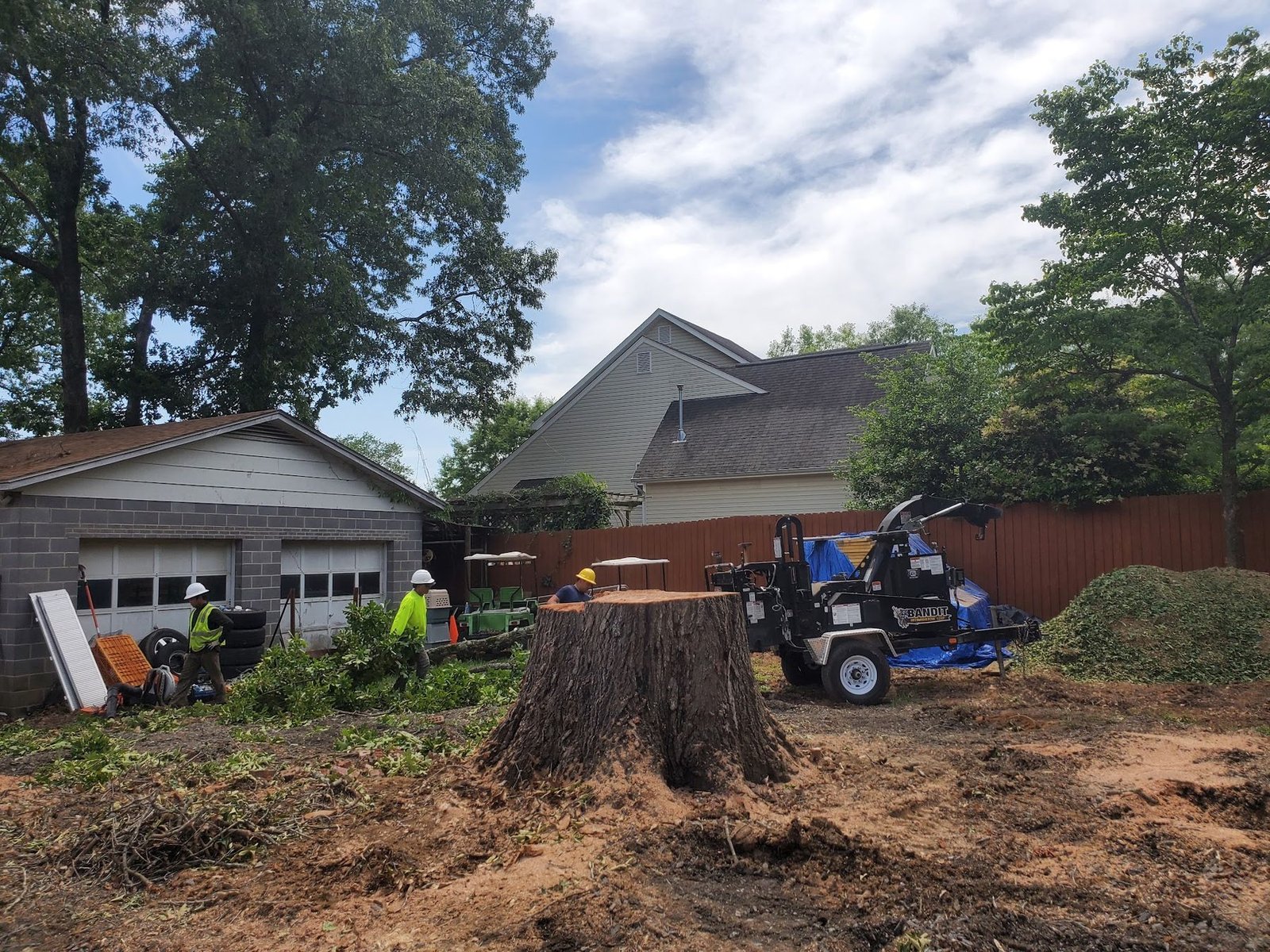
Triad Tree Removal offers stump grinding alongside its tree services. These questions help you understand the proposed scope and avoid treating grinding, hauling, soil work, and planting as one automatic package.
Explain how you want to use the area
Start with the intended next use. You may want a lawn that is easier to mow, room for a garden bed, or space to discuss a later construction project. Describe that goal before choosing a depth or a machine from an online example.
Different future uses raise different questions. A spot intended for grass needs a conversation about remaining wood and soil preparation. A future footing, post, or underground project may need a separate assessment. Do not assume that a ground-down stump means the area is clear for every later use.
If another contractor is involved, share the relevant plan directly with the people assessing the work. Ask who will determine what must be removed and who handles the next stage. The stump-grinding estimate should identify its own responsibility clearly.
You can also say that you have not decided what comes next. Ask what the proposed grinding will leave behind so you can make the next decision with a clearer understanding of the site.
Identify every stump you want included
Give each stump a simple location label, such as “beside the rear gate” or “in the front lawn near the driveway.” Use those labels in your photos and when reviewing the estimate. Several similar stumps can be easy to confuse without a shared reference.
Take photos from a safe, ordinary standing position. A wide view can show the stump and the surrounding area. A closer photo can help identify the visible stump, provided you do not need to move debris or approach an unstable tree to take it.
If you already know an approximate measurement, include it and explain what you measured. Do not dig around the stump to find its full extent. What is visible above the soil does not establish the full underground root system.
Mention whether the tree is already down or whether tree removal is also being requested. Taking down a standing tree and grinding an existing stump are different parts of the discussion, even when you hope to arrange them together.
Describe access before discussing equipment
Explain the route from the driveway or street to the stump. Mention gates, steps, slopes, narrow passages, retaining walls, and surfaces that need attention. A photo of the route can be useful when a written description is unclear.
If you know a gate's approximate width, share it, but leave equipment selection to the crew. Do not assume that a machine used in a video is the one that will be used at your property or that it can fit the same route.
Tell the crew about parking or entry restrictions. A locked gate, shared driveway, or limited space to turn should be discussed before the visit. Ask what needs to be arranged and who will confirm the access plan.
If access would cross a neighbor's property, explain that before making an agreement. Do not promise permission on the neighbor's behalf. The crew needs to understand the actual route that can be authorized for the job.
Ask about public and private underground lines
Bring up underground services before ground-disturbing work is agreed. Tell the crew about any irrigation, outdoor electrical supply, invisible pet fence, propane line, or other private installation you know about. Share plans or records you already have without assuming they establish the exact location.
NC811's private-line guidance distinguishes private facilities from the utilities normally covered by an 811 request. Its frequently asked questions list examples of private lines. An 811 request should not be treated as proof that every buried item at a property has been identified.
Ask who will arrange the applicable notification and locating steps, how responses will be checked, and what separate private-line locating may be needed. Confirm the current process with the crew and the relevant service rather than relying on a copied waiting period in an old article.
Do not probe, expose, or move a line yourself to help explain the request. If you are unsure what is underground, say so. That uncertainty needs resolving before the work proceeds.
Agree on the grinding scope in writing
Ask the estimate to identify the stump and the proposed work. Discuss how the area to be ground is described, what happens to visible surface roots, and what remains outside the scope. A general promise to “get rid of the stump” can leave those details unclear.
Do not choose a universal grinding depth from an online guide. The agreed work should relate to the stump, the site, underground constraints, and your intended next use. Ask the crew to explain the proposed finish for your own property.
If several stumps are included, check whether they have the same scope. One may be beside a fence while another is in open grass. Each should be identifiable in the agreement, including any separate option or limitation.
Also ask how a change would be handled. If a hidden obstruction or a different site condition changes the proposed work, agree on how the revised scope and any changed price will be explained and approved before additional work is carried out.
Decide what should happen to the grindings
Ask how the resulting material will be handled. Discuss whether it stays, is moved to an agreed place, or is removed as part of a separate scope. Do not assume that grinding includes hauling every piece of material away.
Explain any preference you have, then ask what can be agreed. Keeping material for another use is a different request from leaving it around the stump location. Make the intended location and responsibility clear if anything is to remain on the property.
Ask what cleanup means in the estimate. The agreed work should explain which area is addressed and what condition you should expect afterward. It should also distinguish the grinding work from adding soil, leveling, seeding, or another finish.
For an existing wood or branch pile, discuss hauling and chipping separately. That prevents a stump estimate from being interpreted as including unrelated debris elsewhere in the yard.
Plan soil and planting as their own stage
A freshly ground area may still contain wood and roots below the surface. Ask what has been removed, what remains, and what preparation is needed before planting. A flat-looking surface does not establish the condition underneath it.
Purdue Extension's guidance on planting over a removed stump explains that remaining wood can affect rooting space, nitrogen availability, and later settling. It cautions against immediately treating the location as ordinary planting soil.
Use that information to ask for a site-specific plan. Do not add fertilizer or choose a soil treatment from a general statement without considering the actual area. Discuss the preparation with the appropriate lawn or planting professional if it falls outside the tree-work scope.
For a new tree, ask where planting should be considered and what soil and root conditions need assessment. Avoid assuming that the original stump location is automatically the right place for another tree.
Discuss nearby surfaces and plants
Point out fences, paving, garden beds, irrigation components, and plants you want retained. Describe what matters to you before work starts. Photos and a walk-through can help establish a shared understanding of the area.
Ask how the crew will discuss access and protection for those features. This is a planning question, not a guarantee that every surface will remain unchanged. Make sure any particular concern is addressed in the agreed work.
If you are planning other work nearby, explain the sequence you have in mind. A new fence or landscape project may affect access if it is completed first. Confirm the practical order with the people responsible rather than booking based on assumptions.
Keep pets and household access in the same conversation. Ask what needs to be arranged before the visit and how you will know when the work area can be used again. Follow the actual instructions for the agreed job.
Compare estimates using the same finish
Read the scope before comparing the totals. Check which stumps are included, what grinding is proposed, how roots and obstructions are handled, and what happens to the material. Separate optional work from the main price.
Then compare the expected condition of the area afterward. An estimate that includes material removal describes different work from one that leaves grindings on site. Soil replacement and lawn restoration should also be identified if proposed.
Ask about any charge or responsibility that remains unclear. This article does not provide a price range because an actual estimate needs the property and scope. Keeping those details consistent gives you a more useful comparison than matching totals alone.
Save the accepted estimate and any later approved changes. If the plan changes from grinding only to a broader yard project, make sure everyone understands which agreement covers each stage.
Keep these details beside your estimate request
You can begin with a short note and safe photos. Leave unknown items as questions rather than guessing.
- Identify each stump and whether tree removal is also needed.
- Explain how you hope to use the space afterward.
- Describe gates, slopes, parking, and the route into the yard.
- Mention known underground installations and any records you have.
- Ask who arranges applicable locating and notification steps.
- Confirm the grinding, roots, material handling, and cleanup scope.
- Separate soil work, leveling, planting, and other later tasks.
- Ask how unexpected conditions and changes will be approved.
The aim is a clear agreement for the actual site. You do not need to select a machine, diagnose the root system, or investigate underground services before asking for help.
Talk with Triad about the stump
Request a stump-grinding estimate or call (336) 908-7990. The service-area page lists the current Triad coverage; confirm the property and work directly with the crew.
If the project also involves a standing tree, the tree-removal estimate checklist can help you describe that part of the job. Agree on the stump's finished condition before planning the next use of the yard.