

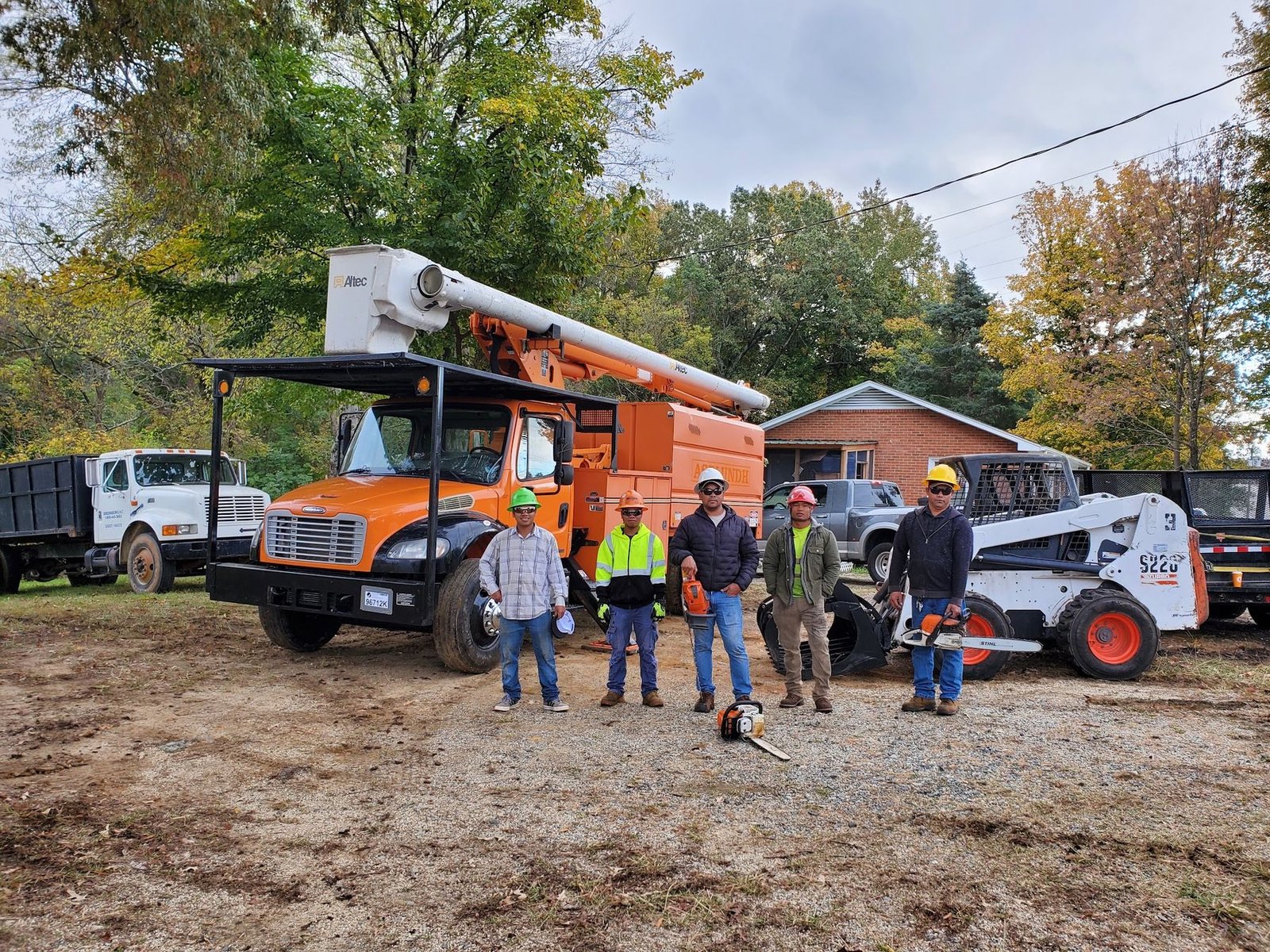
A useful tree removal request starts with the location, a few photos taken from a safe place, and a plain explanation of what you want done. Tell the crew which tree you mean, what is around it, and whether you also want the stump and wood removed.
You do not need to know the tree's height, name, or condition before you get in touch. An initial message helps explain the request. The crew still needs to assess the tree, access, and work before agreeing on the scope and price.
This checklist is for homeowners asking about work in the Triad. You can read about Triad Tree Removal's tree removal service, then use the questions below to prepare your request.
Start with the tree and your main concern
Explain why you are asking about the tree. It may be close to your home, have a broken limb, block a planned project, or simply need an assessment. Describe what you have seen without trying to decide whether the tree is healthy or safe.
For example, “A limb has broken over the driveway” is more useful than guessing that a tree has a particular disease. Say when you noticed the change and whether anything appears different since then. A photo can help show the concern, but it cannot establish the condition of roots or the strength of a limb.
If you are unsure whether removal is needed, say so. You can ask whether tree trimming or a separate tree assessment should be considered. A request for advice does not have to begin with a decision to cut the tree down.
For storm-damaged trees, NC State Extension recommends professional advice. Its guidance explains that conditions vary and simple rules do not fit every tree. That is a reason to have the actual tree assessed rather than make a removal decision from an online checklist.
Take photos that explain the whole setting
Take photos only from a place where you can stand safely. A wide view can show the tree, the ground around it, and nearby buildings. Another view can help identify the trunk or limb you are concerned about. Use your phone's zoom rather than moving closer to damaged wood.
Include enough of the surrounding yard to show the relationship between the tree and the house. A close photo of bark may be useful later, but it gives little information about access or the space around the tree. If there are several trees, mark the one you mean on a copy of the photo.
Do not climb the tree, move a hanging branch, or stand beneath damaged limbs to get a better picture. If a tree or limb involves a power line, keep away and contact the utility or emergency services as appropriate. An estimate request is not a substitute for an urgent safety response.
You can explain that a view is unavailable. “I cannot photograph the back safely” is enough. The crew can decide what information is still needed and how the area should be approached.
Describe the route into the yard
Tell the crew whether the tree is in the front, side, or back yard. Explain how someone reaches it from the driveway or street. A narrow gate, steps, a steep slope, or a fenced side yard can be useful details to mention before a visit.
You do not need to decide which machine will fit. If you already know a gate's width, include it as an approximate measurement. Otherwise, send a photo or explain that the route needs checking. Leave equipment selection and the working method to the crew.
Mention anything that makes access different from an ordinary open driveway. There may be a shared entrance, limited parking, a locked gate, or a surface you want protected. Ask how access will be agreed before work starts rather than assuming a particular route will be used.
If the route crosses someone else's property, make that clear at the beginning. Access permission should be discussed directly. Do not promise a neighbor's yard, driveway, or parking space on their behalf.
Point out buildings, fences, and other things nearby
A useful request explains what surrounds the tree. Mention the house, garage, fence, deck, shed, overhead wires, and any other nearby feature you can see from a safe place. Photos from more than one safe angle can help make the setting understandable.
Explain what you particularly want protected. That might be a recently installed fence, a garden bed, a paved path, or trees you intend to keep. This starts a conversation about the site; it does not guarantee that a job will leave every surface unchanged.
Ask the crew how it will discuss access and protection with you. The written estimate should identify the agreed work clearly enough that you know which tree is included. When several similar trees stand together, a marked photo or shared description can reduce confusion.
Do not enter a neighbor's yard or an unsafe area to gather extra details. Describe what you know, explain what you cannot see, and let the crew assess the remaining questions.
Separate the tree, the wood, and the stump
Tree removal, hauling, and stump work are separate things to discuss. A request that says “remove the tree” can leave questions about what remains afterward. Tell the crew whether you want the logs and branches removed, whether you hope to keep any wood, and whether you want a stump-grinding estimate.
If keeping wood matters, explain the intended use and ask what can be agreed. Do not assume that cutting, splitting, stacking, or placing logs in a particular location is included. Those details should be part of the scope before work begins.
Stump grinding also needs its own conversation. Ask what will remain, how grinding material will be handled, and what additional work would be needed before you use the area again. Avoid assuming that grinding includes removing all roots, adding soil, or planting grass.
For an existing pile of branches or wood, tell the crew that the tree is already down. Hauling and chipping may be the more relevant service to discuss. A photo of the pile and its location helps distinguish that request from taking down a standing tree.
Explain whether there are several parts to the job
List each tree or separate task in your initial message. You may want one tree removed, another trimmed, and an old stump ground. Giving each item a simple label makes the discussion easier and helps you compare the eventual written scope.
If you are undecided, identify the firm request and the optional work. You could ask for the main tree-removal scope first, with a separate option for the stump. That lets you understand what each choice covers without assuming how the business will price it.
Mention any project that depends on the tree work, such as a fence replacement or a planned use of the yard. Explain the timing you have in mind and ask about availability. Do not treat sending a preferred date as a confirmed booking.
For damage after bad weather, use the storm cleanup service page to explain the request. Tell the crew whether the tree is standing, partly fallen, or already on the ground, using only what you can observe safely.
Compare written scope before comparing totals
Two estimates can describe different work even when they refer to the same tree. Read the details before comparing the final figures. Look for the identified tree, the removal work, the handling of wood and branches, and any separate stump option.
Ask what cleanup means for your job. It may be important to agree where material will be left, whether any wood stays, and which area is included. A short question before acceptance is easier to resolve than different expectations after the crew arrives.
Also ask how changes will be handled. If you later add another tree or decide to keep some logs, the original scope may need updating. Get the changed work and any revised price agreed before it is carried out.
You can request current insurance information or ask about relevant qualifications when choosing a contractor. Verify the information supplied for the actual business. A general article should not stand in for checking the contractor and the particular work yourself.
A request you can prepare in a few minutes
Use the following list as a note for your call or message. Leave an item unanswered if you do not know it. Clear information is useful; guesses can make the request harder to understand.
- Say which town the property is in and give the location directly to the business.
- Describe the tree's position, such as the back yard beside the detached garage.
- Explain the concern or the reason you want the work considered.
- Include safe photos of the tree and its surroundings if available.
- Describe the route into the yard and any access restrictions.
- List nearby buildings, fences, wires, and surfaces you want discussed.
- Say whether removal, trimming, hauling, or stump work is being requested.
- Explain any timing preference and ask what needs to happen before booking.
Keep private details in the direct conversation. You do not need to publish your address, access instructions, or photos on a public review page to ask for an estimate.
Questions homeowners ask before sending a request
Do I need to identify the tree species?
No. If you know it, include it, but a plain description and safe photos are a useful starting point. Do not delay a request because you cannot name the tree. Identification and assessment can be discussed with the person evaluating the work.
Can photos provide a final price?
Ask the business what its estimate process requires. Photos provide context, but access, condition, and the agreed work may still need a visit. Avoid treating an early conversation as a final quote or a confirmed appointment.
Is stump grinding automatically part of removal?
Confirm it in the written scope. Also ask about the grinding material, any remaining stump or roots, and the condition you want the area left in. Your intended next use of the space can help explain those questions.
What if the tree might belong to a neighbor or the city?
Explain the uncertainty before agreeing to work. Confirm ownership and any needed authorization with the relevant owner or authority. Do not assume that a tree near a boundary belongs to you simply because branches extend over the yard.
Ask Triad about the work you need
Triad Tree Removal serves Greensboro and the approved surrounding Triad towns listed on its service-area page. Use that page to check the existing coverage, then describe the actual property and work when you get in touch.
Request a tree-work estimate or call (336) 908-7990. Start with the tree, the concern, and a few safe photos if you have them. The next conversation can establish what needs assessing and what the proposed work should include.