

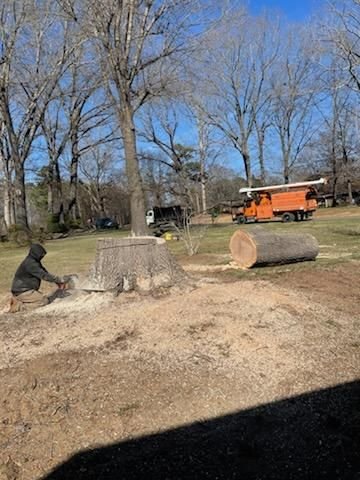
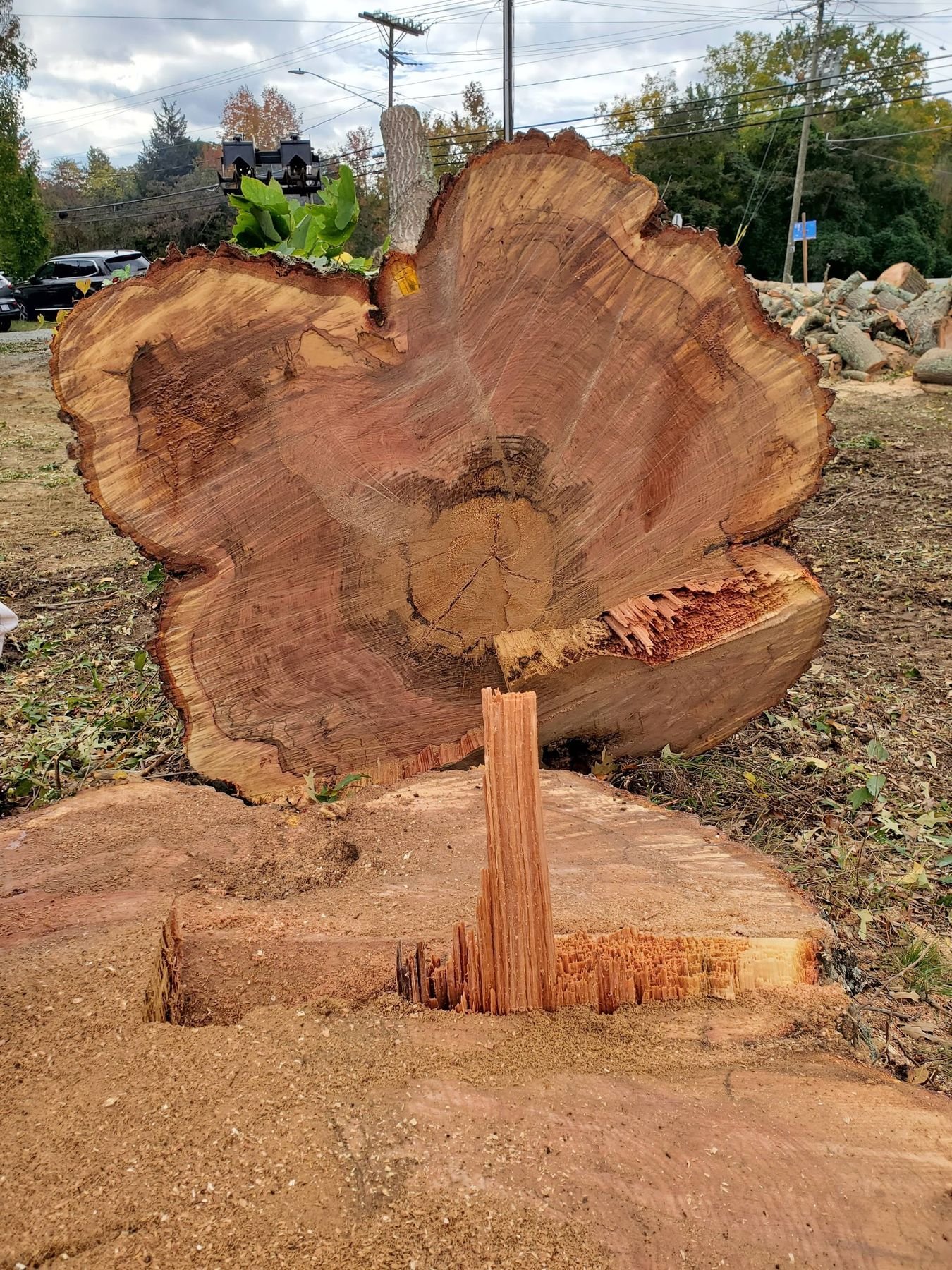
Grinding a stump and pulling a stump are two different jobs
People use the words interchangeably and they are not the same thing.
Grinding uses a machine with a spinning wheel of carbide teeth that chews the stump down in passes until it is below the level of the yard. The roots stay in the ground and rot away over the next few years.
Pulling means dragging the whole root plate out with an excavator. It leaves a crater the size of a small car, it takes the soil with it, and on most residential lots it is far more damage than the stump was ever causing.
Grinding is what nearly every homeowner actually wants. Pulling only makes sense when something is going in the same hole, like a foundation footing or a pool.
Photos are often enough to price a stump. Text a couple of pictures to (336) 908-7990 with something next to the stump for scale, a shovel or a shoe, and say roughly how far it is from the driveway. That is usually all it takes for a number, without anybody having to drive out.
What actually happens on the day.
How far down it goes
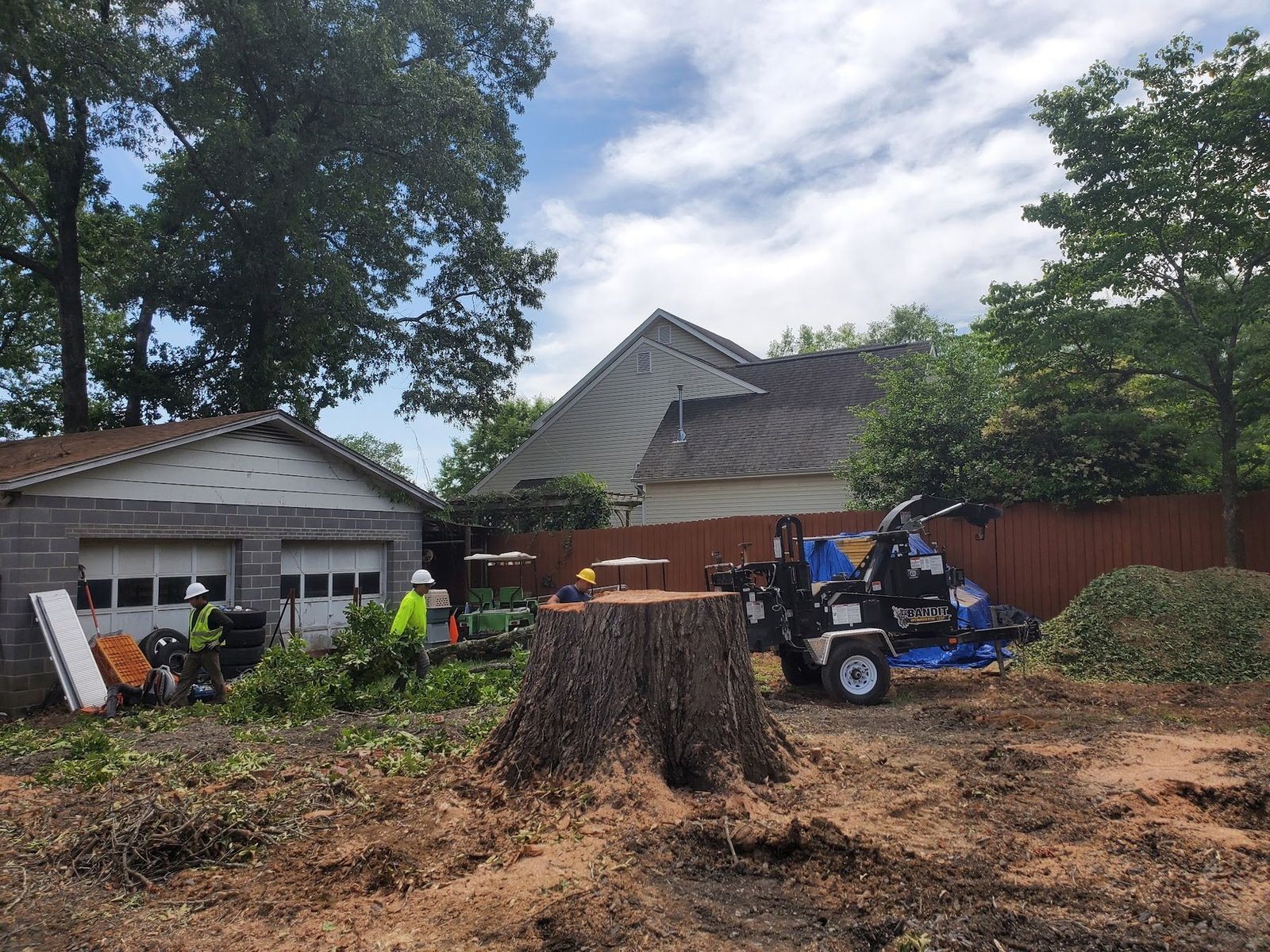
The wheel takes the stump below grade, which means below the level of the surrounding yard rather than flush with it. That is the part that matters, because a stump cut flush still sits proud once the soil settles, and you will hit it with a mower.
How far below depends on what you want to do with the spot. Putting grass over it needs less than planting a new tree in roughly the same place, and a new tree really wants a different spot anyway.
Tell the crew what you are planning at the estimate and they will take it to the right depth the first time.
The flare is wider than the trunk
The base of a tree spreads out where it meets the ground, and the surface roots run out from there. Grinding a two-foot trunk means clearing a patch noticeably wider than two feet, which is worth knowing if the stump is close to a walkway or a fence post.
What is left behind
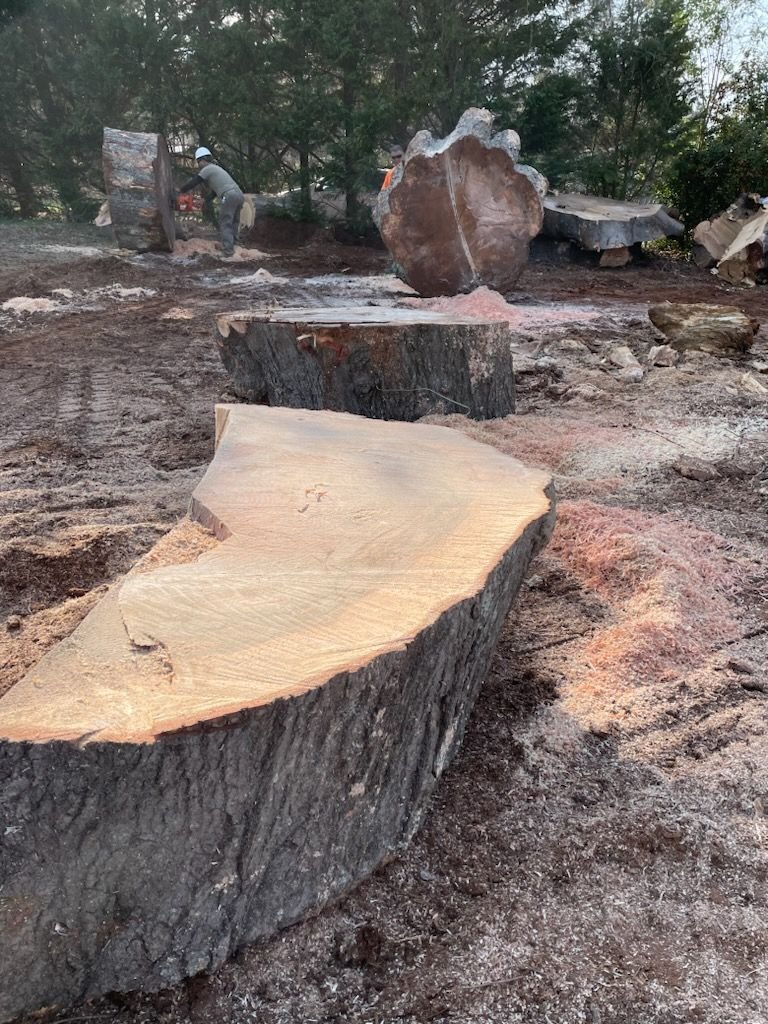
Grinding produces a pile of chips and soil mixed together, and there is more of it than people expect. A big stump makes a mound.
You have three options and the crew will do whichever you ask for at the estimate:
- Leave the grindings in the hole. Cheapest and fastest. They settle over the first year, so the spot will dip and want topping up.
- Rake them out and haul them off. The hole gets backfilled so you can seed it.
- Keep them. Some people want them for beds or paths.
One thing worth saying plainly: grindings are not topsoil. They are mostly wood, and wood pulls nitrogen out of the soil as it breaks down. If you want grass there this season, get real soil in the hole.
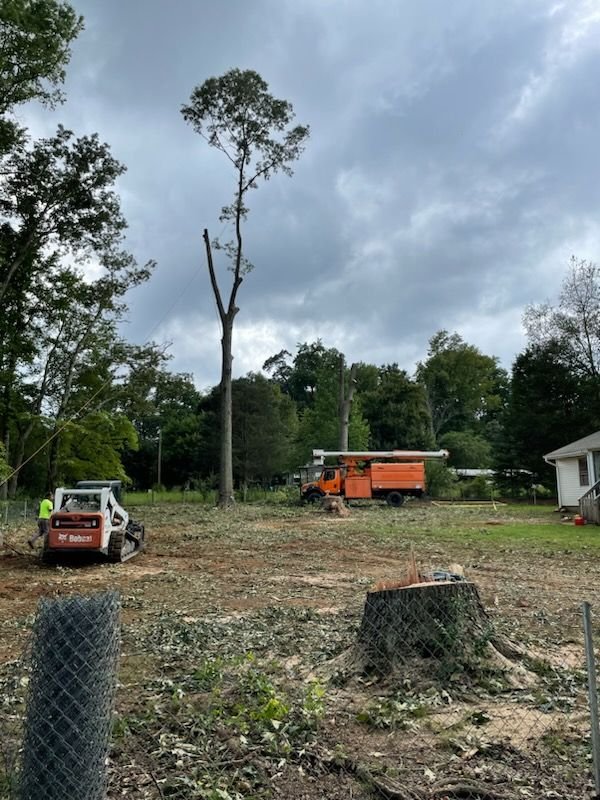
Will the tree grow back after the stump is ground?
Almost never, and the exceptions are worth knowing. A ground stump has no leaves, so it cannot feed itself and it dies.
What does happen on some species is root suckering, where shoots come up from roots still in the ground several feet away from where the stump was. Sweetgum, poplar, locust, and a few others are known for it around here.
Those shoots are easy to deal with. Mow them, and they give up within a season or two once the root system runs out of stored energy. They are not the tree coming back.
If you are seeing suckers across a whole lawn a year later, that is worth a call, because it usually means a root system large enough that a few of them are still connected to something living.
Planting something new in the same spot
People often want a replacement tree where the old one stood, and that is the one thing a ground stump makes awkward. The old root system is still in the ground and it will be for years, so a new root ball has nowhere good to go.
Move the new tree a few feet if you possibly can. If it has to go in the same place, the grindings need to come out and real soil has to go back in, and the crew will take the grinding deeper for that. The ISA covers planting a new tree properly, and NC State Extension Forestry is the place to look for species that suit the Piedmont.
We will grind a stump somebody else left
Plenty of the stump calls Triad takes are cleanup after another company. A crew removed the tree, the stump was extra, and it has been sitting there ever since.
You do not have to have bought the removal here. Old stumps, half-rotted stumps, and stumps that have had a flower bed built around them are all normal work.
What actually changes the price.
Triad publishes no prices. Stumps are the one job that can often be quoted from texted photos, and these are the three things being sized up.
Diameter at the flare
Measured across the widest part where the trunk meets the ground, not the trunk higher up. That flare is most of the work.
Whether the grinder can reach it
A stump beside the driveway and a stump behind a locked gate on a slope are different jobs with the same diameter.
What you want done with the grindings
Leaving them in the hole costs less than raking them out and hauling them off, and both are perfectly normal.
Reasons people stop putting it off
- It is the one thing the mower keeps hitting
- Carpenter ants and termites move into rotting wood near the house
- Shoots keep coming up around it every spring
- It is in the way of a fence line, a shed, or a patio
- Somebody is going to trip over it in the dark
- The yard cannot be graded or seeded around it
What a stump costs you if you leave it
A stump is not urgent, which is why so many of them sit for years. It does have a running cost though, and it is worth knowing what it is before you decide to live with it.
Rotting wood near a house attracts things you do not want. Carpenter ants and termites are drawn to damp decaying wood, and a stump twenty feet from a crawl space is a food source sitting inside their range.
Then there is the mower. Everybody says they will remember where it is, and everybody eventually hits it. A stump grinder is cheaper than a deck and a blade.
The last one is the yard itself. You cannot grade, seed, run a fence line, or put a shed anywhere near it, so a stump quietly takes a piece of the yard out of use.
Where we work
Greensboro is home, and the yard is at 4262 Pleasant Garden Rd. The crews cover the wider Triad: High Point, Winston-Salem, Jamestown, Kernersville, Summerfield, Oak Ridge, Pleasant Garden, Archdale, Thomasville, Gibsonville, Whitsett, Browns Summit, Colfax, Stokesdale, McLeansville, Randleman, and Julian.
If your town is not on that list it is still worth asking. The answer is usually yes.
What customers said about work like this
Taken from the company's Google profile, word for word.
We have several very tall pines on our farm that eventually would have fallen on fences and buildings. They came out and cut the trees down in a day, then returned the following day to grind the stumps down. I wished I had taken them up on the offer to keep the pine chips from the trees so we could use them for the barns. They cleaned up the area nicely.
We have used triad tree removal twice, first time for stump grinding after we had a different company cut trees down & they were excellent- left the yard perfect. Second time we recently had them remove a couple trees. They work quickly & fair prices & very tidy work. I highly recommend them!
Triad Tree took down several large trees, limbed several more, and removed stumps. They did an excellent job and their crew was quick and courteous. When I asked them to go back near the end and take out one more large limb, they were happy to accommodate me. I recommend them highly.
Stump grinding questions we get every week.
How much does it cost to grind a stump in Greensboro?
Will the tree grow back if I grind the stump?
How long does it take to grind a stump?
How deep do you grind?
What happens to all the wood chips?
Can I plant grass right over it?
Can you grind a stump another company left behind?
Can you get a grinder into a fenced back yard?
The rest of what we do.
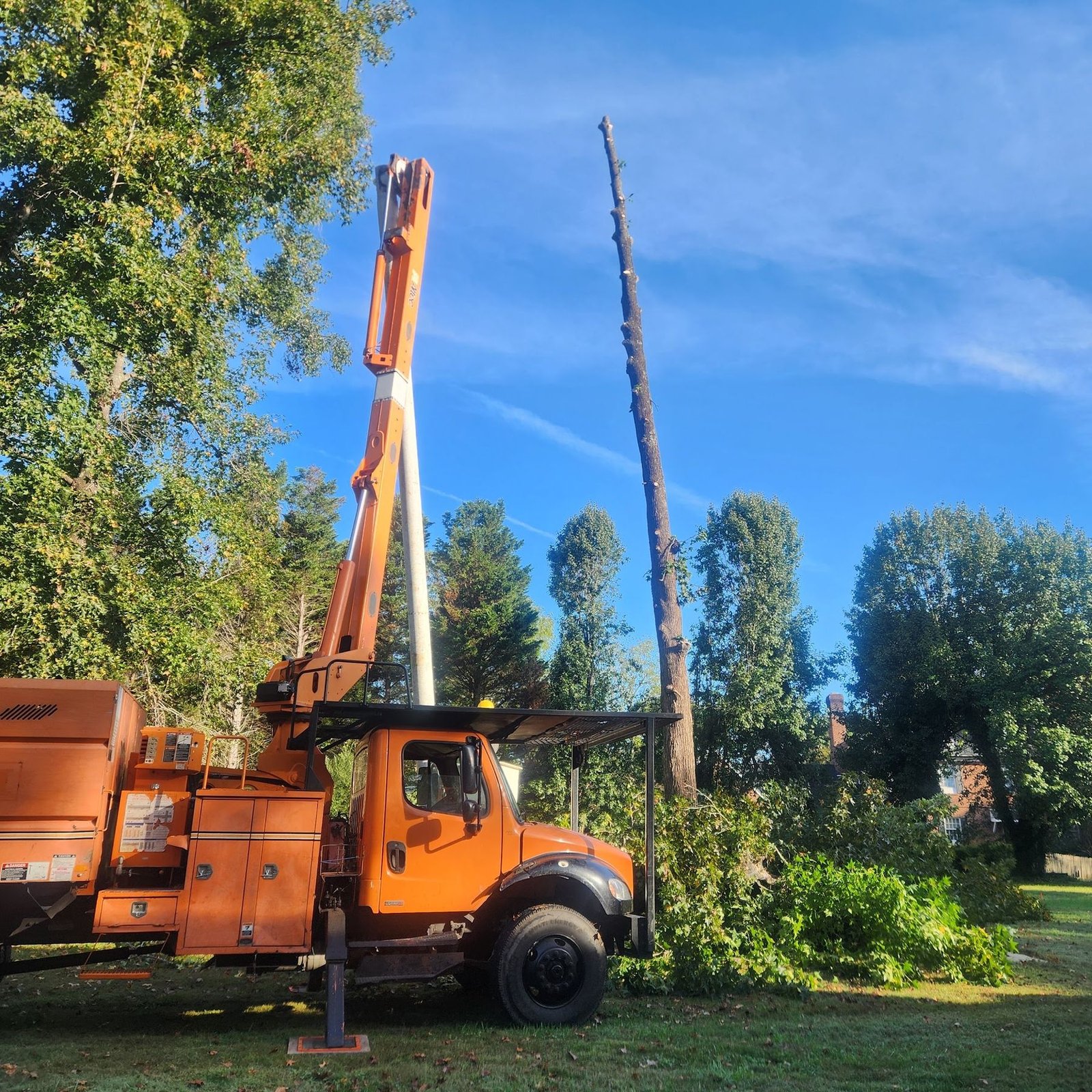
Tree Removal
Large and hazardous trees taken down in sections, roped and lowered, and hauled out.
Read more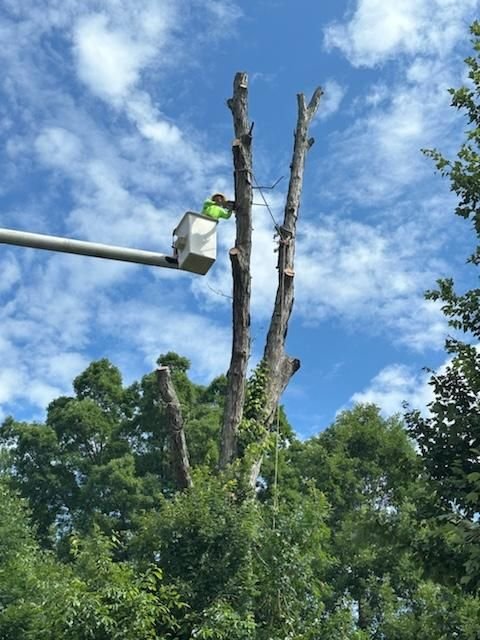
Trimming & Limbing
Deadwood out, limbs off the roofline, and canopies thinned before storm season.
Read more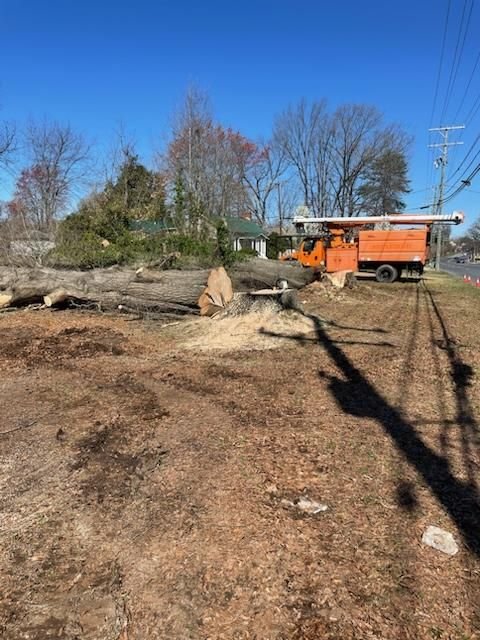
Lot & Land Clearing
Building sites, fence lines, and overgrown acreage cleared with skid steers and a mulcher.
Read more