

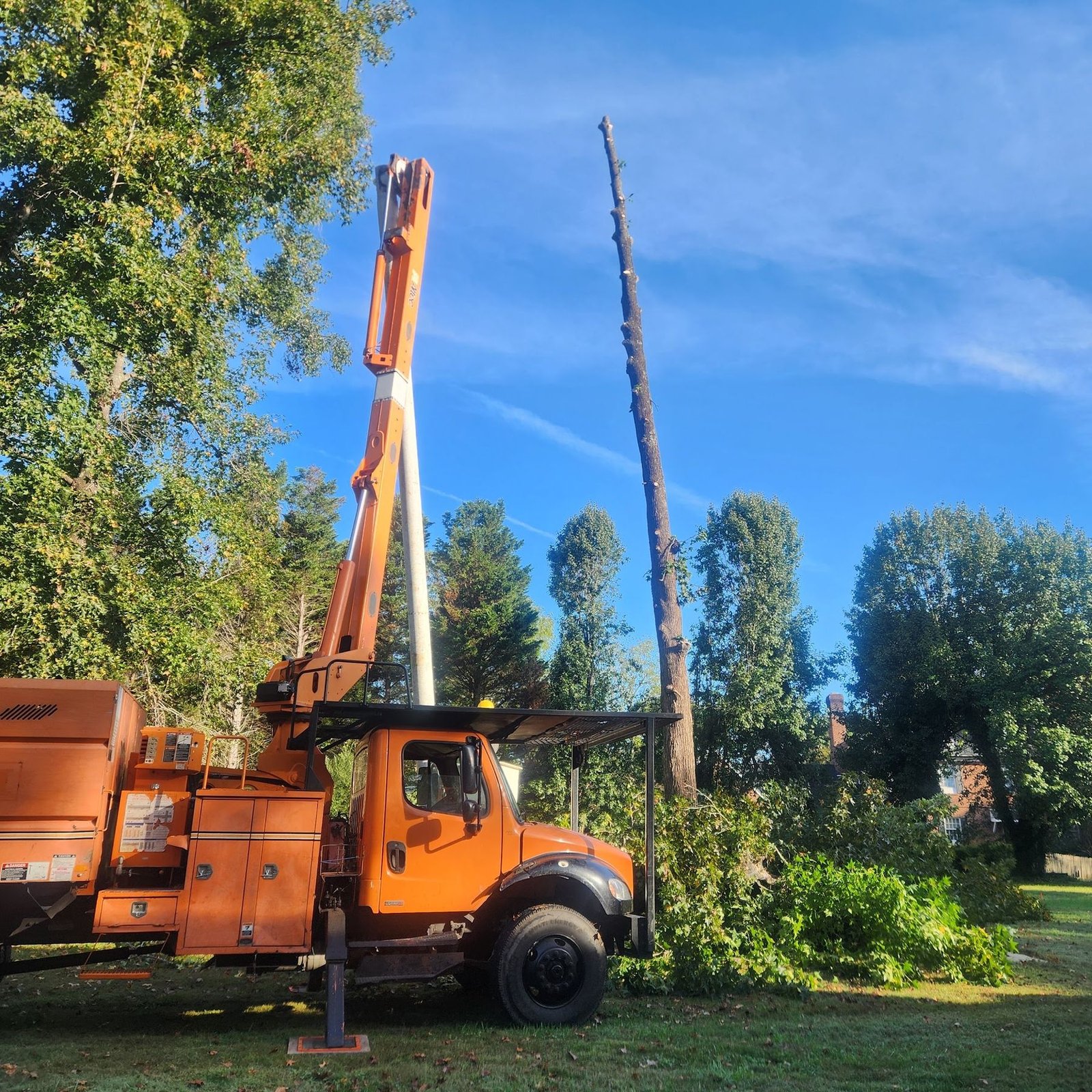
When a tree actually has to come down
Plenty of the trees we get called out to look at do not need removing. A dead limb over a driveway is a trimming job, and we will say so on the estimate rather than sell you a removal you do not need.
A tree is usually past saving when the trunk itself is failing. Leaves and limbs grow back. A split trunk or a rotted base does not.
The other half of the job is trees that are perfectly healthy and standing in the wrong place. Roots lifting a driveway, a canopy that drops limbs on the same roof every summer, or a tree leaning over the room where somebody sleeps.
Those come down for one reason: what happens when it fails is worse than losing the tree.
Signs a tree is already going
- A crack or a split running down the trunk
- Mushrooms or shelf fungus at the base or on the roots
- A hollow that sounds soft when you knock on it
- Bark falling away in sheets on one side
- Soil lifting or cracking on one side of the base
- Dead limbs in the top third, two seasons running
- A lean that has changed since last year
- Carpenter ants or sawdust piles around the root flare
A leaning tree is not automatically a dangerous tree. Plenty of hardwoods around Greensboro have leaned the same direction for forty years and are fine. What matters is whether the lean is new, and whether the soil on the high side is lifting. If the ground is cracking, call somebody out this week.
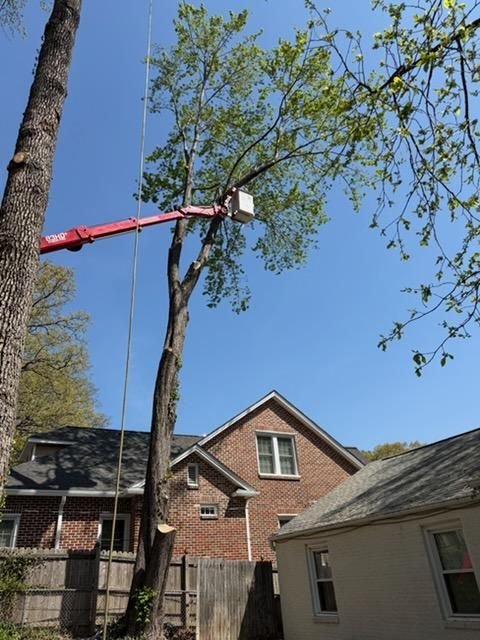
Taking a big tree down next to a house.
A tree in an open field gets felled in one piece. Almost nothing in a Greensboro back yard is in an open field.
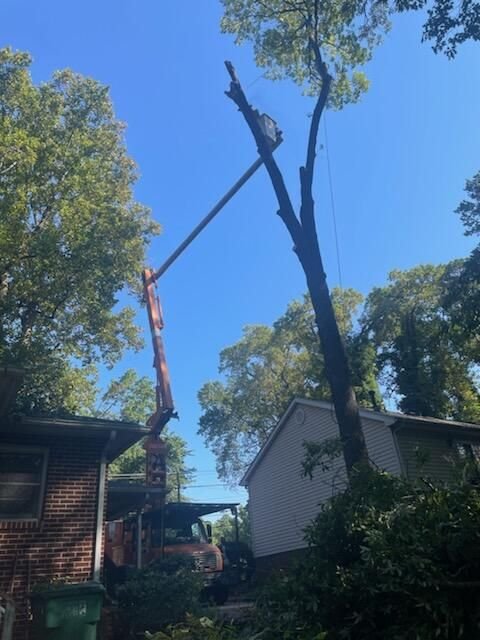
From the top, in sections
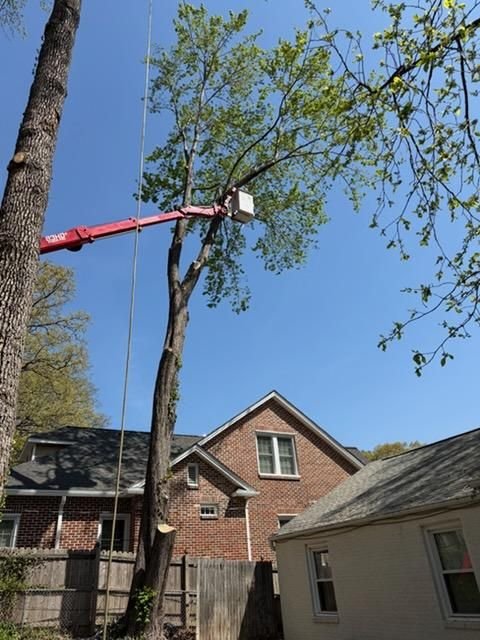
The crew starts at the top and works down, cutting the tree into pieces small enough to control by hand. A bucket truck puts a cutter at the right height. On the tight ones a crane lifts each section out over the roof and sets it down in the driveway.
Nothing comes down in one drop. That is the whole method, and it is why a hundred-foot oak can come out from between two houses without either one getting touched.
It is slower than felling. It is also the only way to do it when there is a roof, a fence, a pool, or a neighbor's shed underneath.
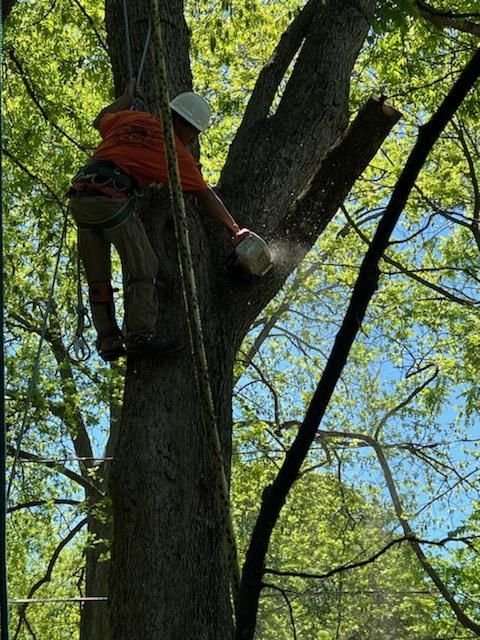
Roped and lowered, not dropped
Where there is anything underneath worth protecting, every limb gets tied off and lowered on a rope instead of being cut free and allowed to fall.
Customers write about this more than any other part of the job. Trees ringed by concrete, trees ten feet off a wall, and trees between two houses all came out without damage because the wood was on a line the whole way down.
Ask about it at the estimate. Anybody quoting your job should be able to tell you exactly where the rigging goes and where the wood lands.
When no truck can get to it
Back yards with a gate too narrow for a bucket truck, trees behind a garage, ground too soft to drive on after a wet week. None of that stops the job, it just changes how it gets done.
A climber goes up on rope and saddle and takes the tree apart by hand, piece by piece, with the ground crew lowering and clearing underneath.
Access is the single biggest thing that changes what a removal costs, which is why nobody can put a real number on your tree over the phone without seeing what is between it and the road.
The part customers actually write reviews about
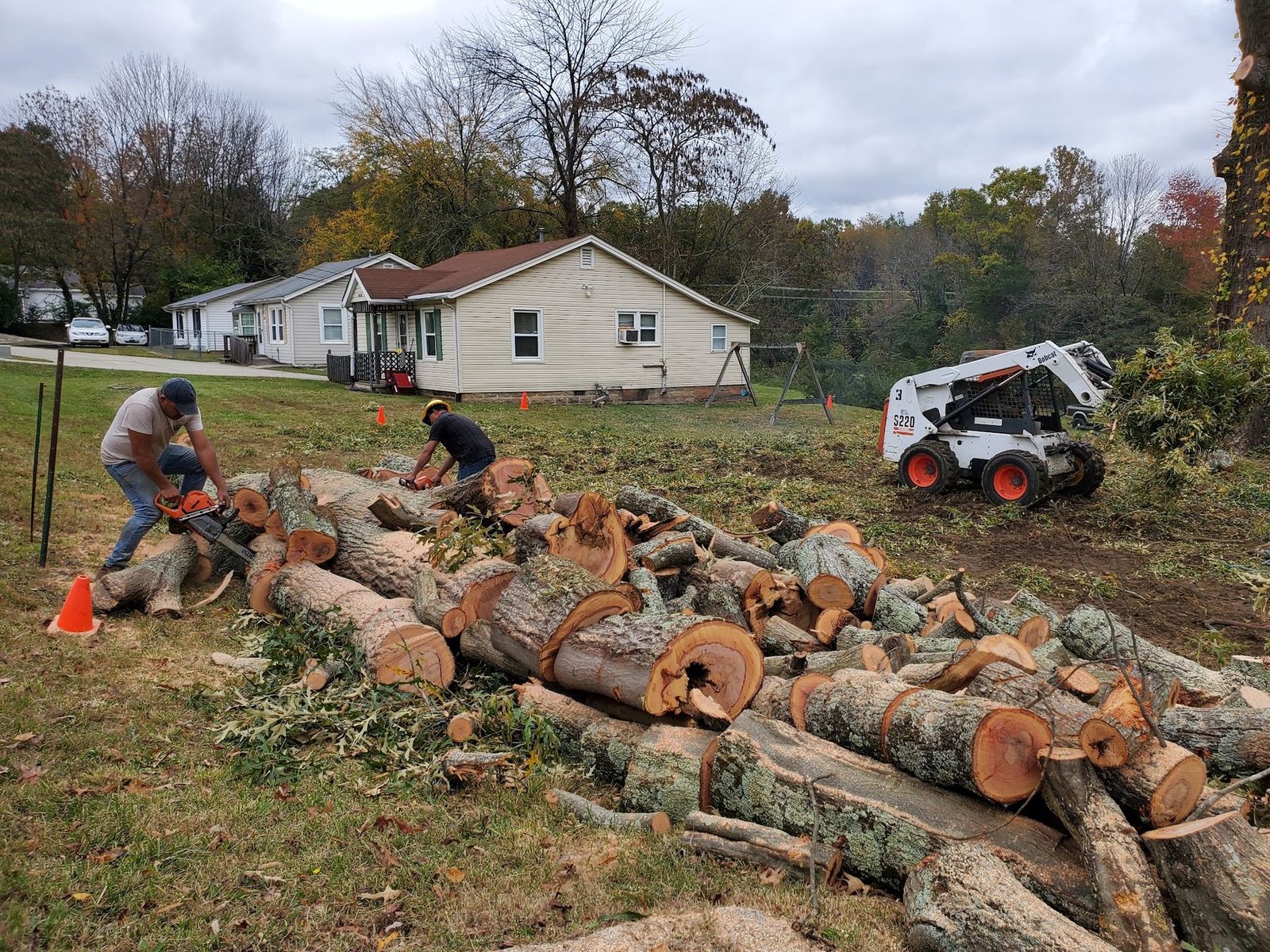
Cleanup is the single most mentioned thing in the Google reviews, ahead of price and ahead of speed. Reviewers keep using the same phrase: the yard looked better than it did before the crew showed up.
What that means in practice. Wood goes out on the grapple truck. Brush runs through the chipper. The driveway gets blown off and the grass gets raked before anybody leaves.
If you want the firewood, say so at the estimate and the crew cuts it to length and stacks it instead of hauling it away. Same with the chips, which are worth keeping if you have beds to mulch.
A five-person crew is normal for a residential job, and most residential jobs finish in a single day. One customer had fifteen trees removed and trimmed in a day after other companies quoted three to five days.
What actually changes the price.
Triad publishes no prices, and any company that gives you a firm number over the phone without seeing the tree is guessing. Three things drive the estimate, and you can size all three up yourself before anybody arrives.
The tree itself
Height, trunk diameter, and species. A hardwood carries far more weight per foot than a pine of the same height, and weight is what dictates the equipment.
What is underneath it
A roof, a fence, a septic field, a pool, or a power service drop all mean rigging every piece down on a rope instead of dropping it. That is time.
How close a truck can get
Gate width, slope, soft ground, and whether the bucket truck can reach or a crane has to set up in the street. Access changes the job more than size does.
On the free estimate. It costs nothing and there is no obligation to book. Somebody comes out and looks at the tree, usually the same day you call or the next. The certificate of insurance goes out with the estimate rather than only if you think to ask for it.
Reviewers regularly write that Triad came in under the other quotes they got. We are not going to turn that into a number here, because your tree is not their tree.
Storm damage and emergency removals
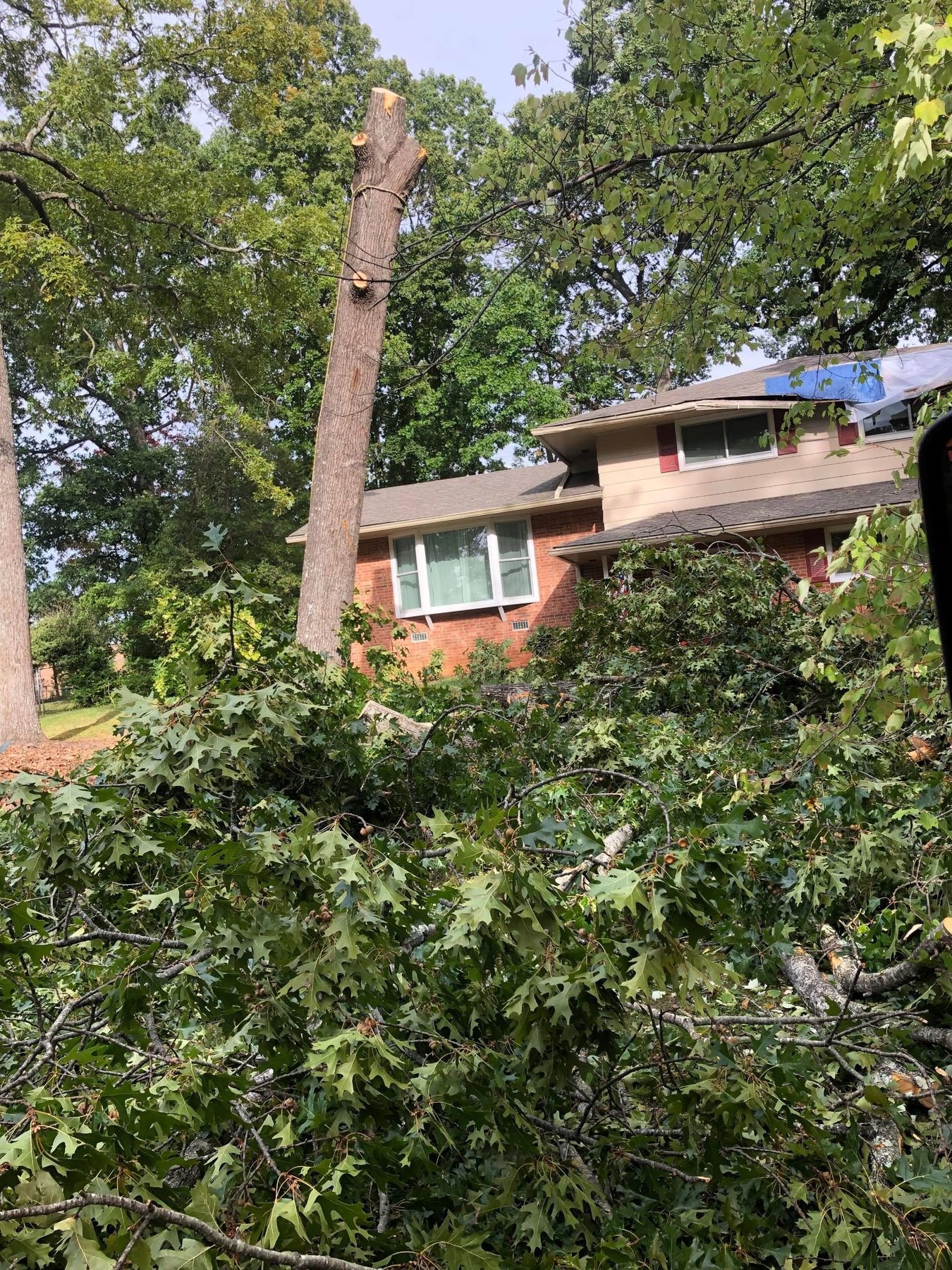
Storm work goes to the front of the schedule. Trees on houses, trees across a driveway, and trees hung up in other trees all get moved ahead of routine jobs.
If a tree is on your house or blocking you in, call (336) 908-7990 rather than filling in a form and waiting for a callback. Storm calls get taken seven days a week.
A hung-up tree is the one to take seriously. It is holding a load it was never meant to hold, and it can come the rest of the way down on its own with no warning. Keep people and cars out from under it.
Anything touching a power line is different. Call the utility first, stay well away from it, and do not assume a line is dead because the lights are out. The ISA has a plain-English guide to what to do with a storm-damaged tree, and the NC Forest Service publishes guidance for North Carolina specifically.
What happens to the stump
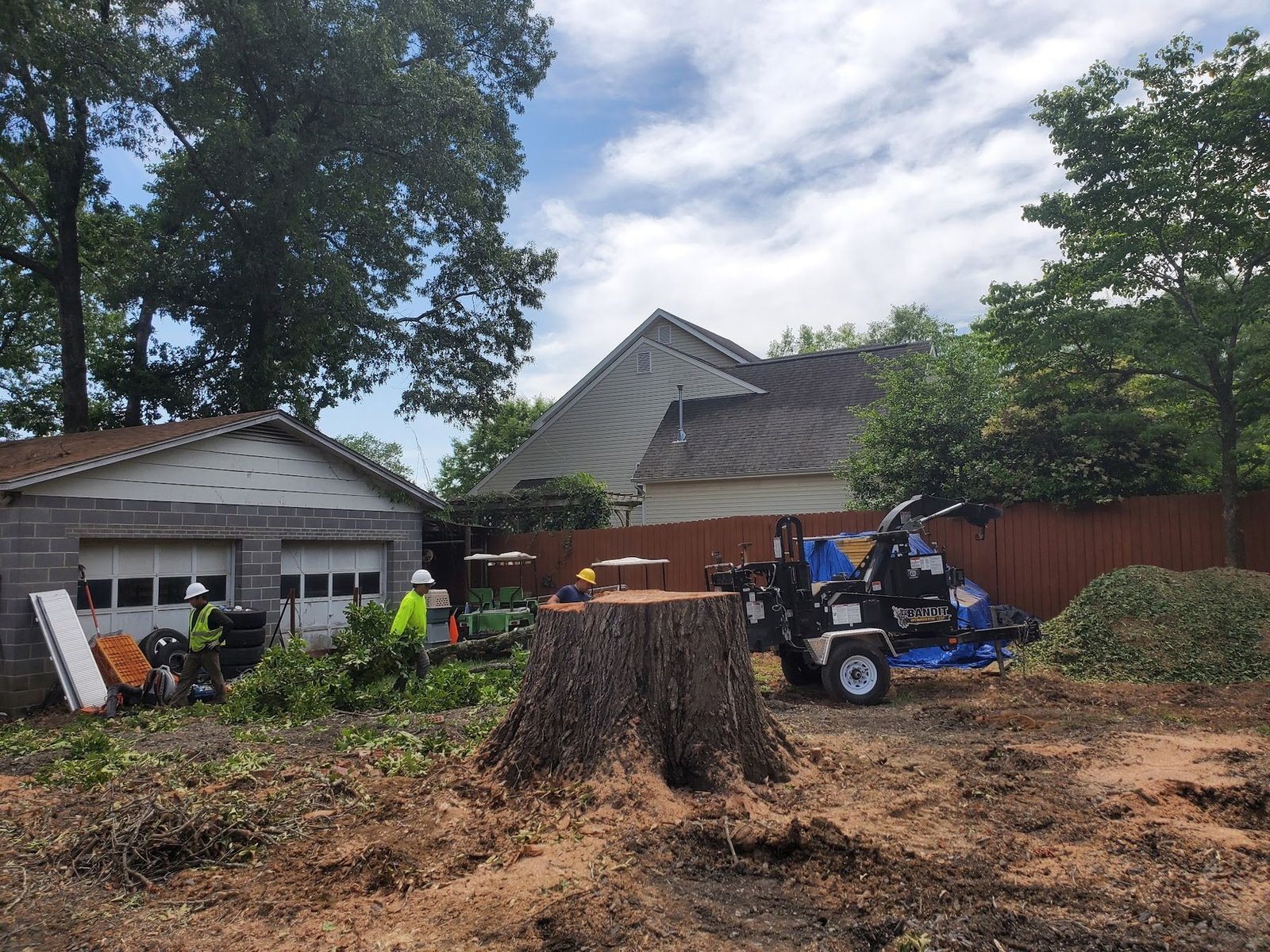
Taking a tree down leaves a stump, and grinding it out is a separate machine and a separate line on the estimate. Some people want it gone the same week. Others leave it a year and call back.
Either is fine, but decide before the crew leaves if you can, because a stump is easier to reach before the yard grows back in around it. Full detail on how stump grinding works and what it leaves behind.
Where we work
Greensboro is home, and the yard is at 4262 Pleasant Garden Rd. The crews cover the wider Triad: High Point, Winston-Salem, Jamestown, Kernersville, Summerfield, Oak Ridge, Pleasant Garden, Archdale, Thomasville, Gibsonville, Whitsett, Browns Summit, Colfax, Stokesdale, McLeansville, Randleman, and Julian.
If your town is not on that list it is still worth asking. The answer is usually yes.
What customers said about work like this
Taken from the company's Google profile, word for word.
We had a large oak tree removed from our property with the help of the Tiad Tree Removal Services. The tree was close to our house, the fence and was surrounded by the concrete all around the tree. The job was done very professionally, the crew worked very efficiently and cleaned everything up after the job was completed. There was no damage to the fence or the concrete. We are very pleased with the work. The price was very reasonable. We would recommend this service to anybody.
We have used triad tree removal twice, first time for stump grinding after we had a different company cut trees down & they were excellent- left the yard perfect. Second time we recently had them remove a couple trees. They work quickly & fair prices & very tidy work. I highly recommend them!
Triad Tree took down several large trees, limbed several more, and removed stumps. They did an excellent job and their crew was quick and courteous. When I asked them to go back near the end and take out one more large limb, they were happy to accommodate me. I recommend them highly.
Tree removal questions we get every week.
How much does it cost to remove a tree in Greensboro?
How close is too close for a tree next to a house?
How long does a tree removal take?
Can you remove a tree that has already fallen on the house?
Is there a cheaper time of year to have a tree removed?
Do I need to be home while you work?
Are you insured, and can I see proof?
Do you take the wood away?
The rest of what we do.
Stump Grinding
Ground out below grade so you can put grass over it. We grind stumps other companies left behind too.
Read more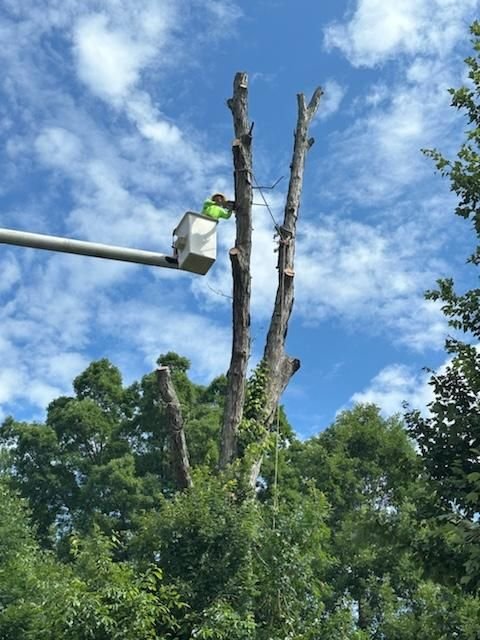
Trimming & Limbing
Deadwood out, limbs off the roofline, and canopies thinned before storm season.
Read more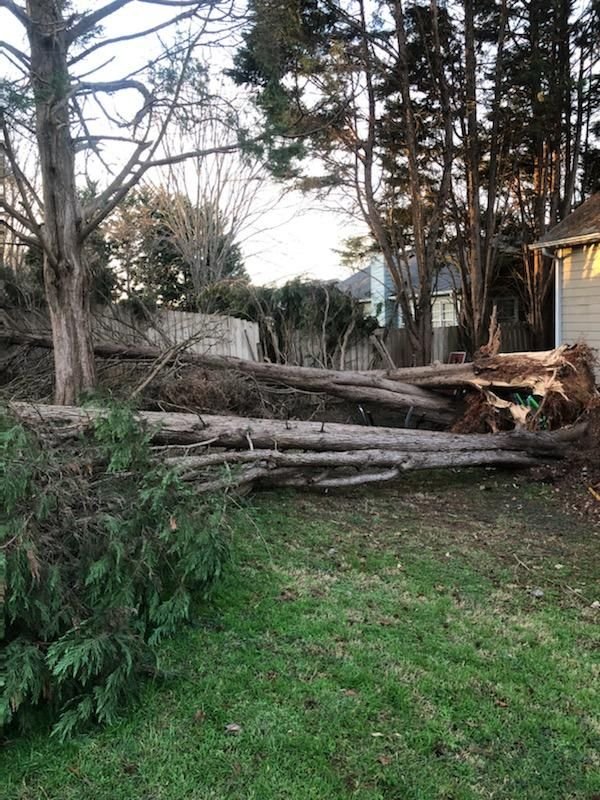
Storm Damage
Trees on houses, across driveways, or hung up in other trees. Seven days a week.
Read more