

What trimming actually covers
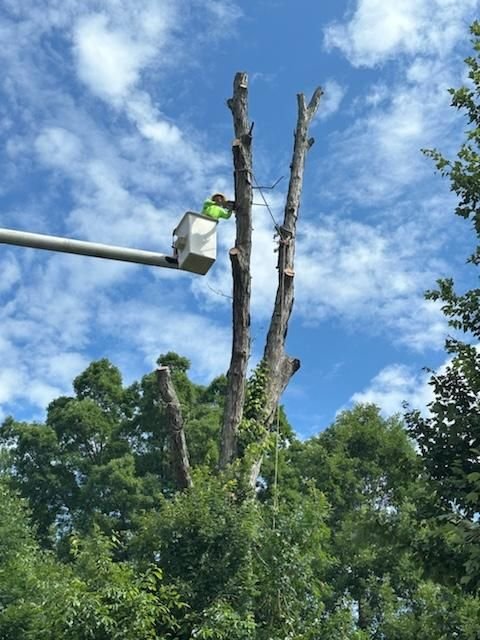
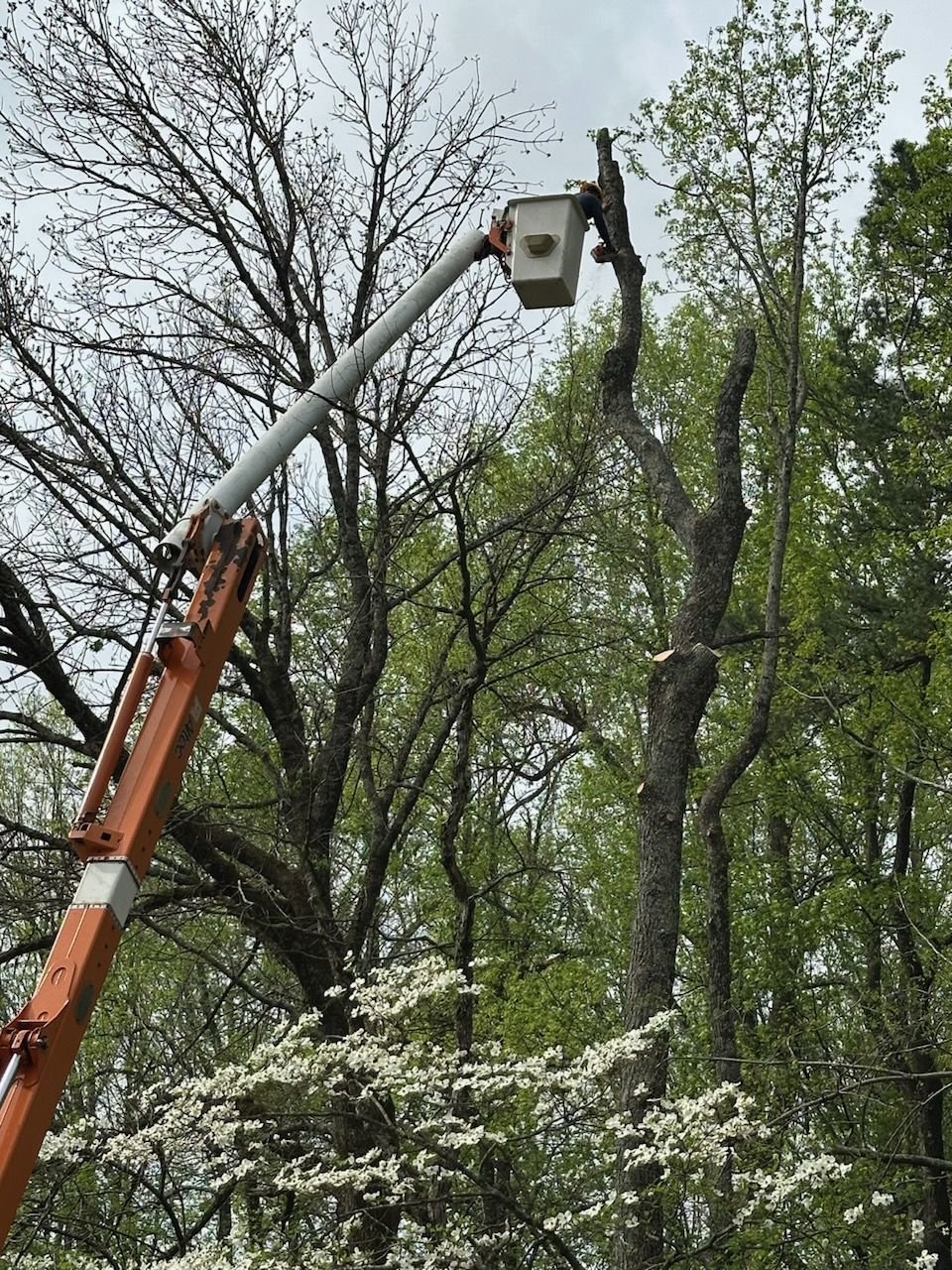
Trimming is a broad word for four different jobs, and knowing which one you need makes the estimate go faster.
Deadwood removal. Taking the dead limbs out of a canopy. Dead wood is brittle, it comes down on its own eventually, and it usually picks a windy night to do it.
Clearance. Cutting limbs back off a roofline, a driveway, a gutter run, or the path to the front door.
Thinning. Selectively taking limbs out so wind moves through the canopy instead of pushing against it like a sail. This is the one that matters before storm season.
Raising. Removing the lowest limbs so you can mow, park, or walk underneath.
Trimming is not the same as removing, and a good estimate should tell you which one your tree needs. Plenty of the trees we get called out to look at turn out to need an hour of deadwooding rather than a takedown. If a tree does turn out to be past saving, that is a removal and a different conversation.
The best time to trim a tree in North Carolina.
This is the question we get asked more than any other, and the answer is mostly the same for the whole Piedmont.
Late winter is the window
Late winter, while the tree is dormant and before the buds break, is the best time to prune most trees here. The tree is not spending energy on leaves, the wounds close fast once spring growth starts, and with the canopy bare the crew can actually see the structure they are cutting.
Insects and fungal diseases are also least active in the cold, so a fresh cut is far less likely to get colonized. North Carolina Cooperative Extension keeps a month-by-month pruning calendar for exactly this, and the Piedmont Master Gardeners publish a version aimed at our part of the state.
What not to cut in spring
Spring-flowering trees such as dogwood, redbud, and cherry set their buds the previous year. Prune them in late winter and you cut off the flowers you were waiting for. Those get pruned right after they finish blooming instead.
Oaks are the other one to be careful with. Pruning oaks during the active growing season raises the risk of oak wilt, which is spread by beetles drawn to fresh wounds. Dormant-season pruning avoids the whole problem.
When you should not wait for the calendar
All of the above is about elective pruning. A broken limb hanging over a driveway does not care what month it is.
Dead, damaged, and dangerous wood comes out whenever you find it. So does anything hanging after a storm. Waiting until February to take a cracked limb off a roof is how a cheap job becomes an insurance claim.
Late winter, dormant
Most shade and hardwood trees. Structure is visible, wounds close quickly, and disease pressure is at its lowest.
Spring bloomers
Dogwood, redbud, cherry and the like set buds the year before. Prune them once the flowers have finished.
Dead and dangerous wood
Broken, hanging, cracked, or dead limbs come out the day you find them, whatever the season says.
Limbs over the roof and the driveway
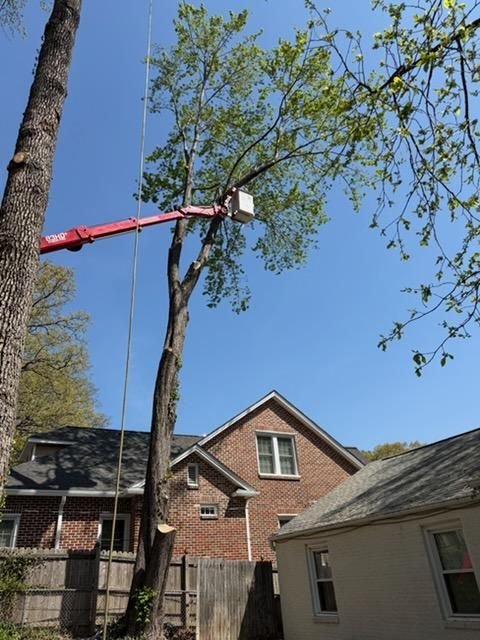
The most common trimming call in Greensboro is limbs on a roof, and it is worth doing before anything is actually broken.
Branches resting on shingles wear the granules off them every time the wind moves. They drop leaves into gutters, they hold moisture against the roof, and they hand squirrels a bridge into your attic.
The rule of thumb is to keep limbs clear of the roof surface by enough that they cannot touch it in a wind. How much that is depends on the species and how flexible the wood is, which is something the estimator can eyeball in about a minute.
The ISA has a plain guide to pruning mature trees if you want to read up before anybody comes out.
Trees near power lines
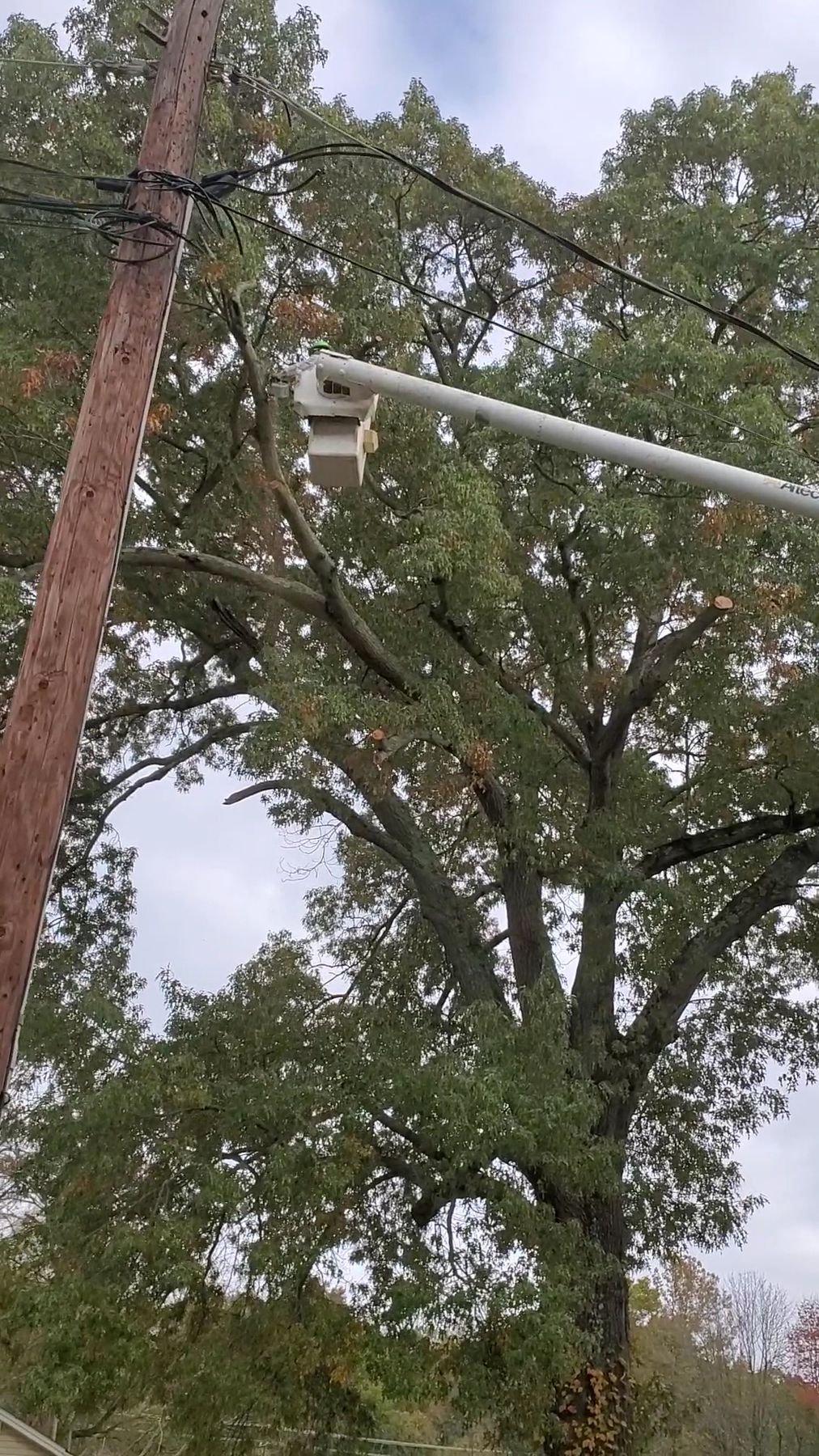
Anything growing into a power line is not a homeowner job and it is not a general tree-trimming job either. Start by calling your utility.
The service drop running from the pole to your house is usually the homeowner's side of the line, and the utility's own crews handle the primary conductors on the poles. Which is which is not always obvious from the ground, so ask before anybody puts a saw near it.
Never assume a line is dead because the power is out. The ISA covers how to avoid tree and utility conflicts, including what to plant where so this does not come back around in fifteen years.
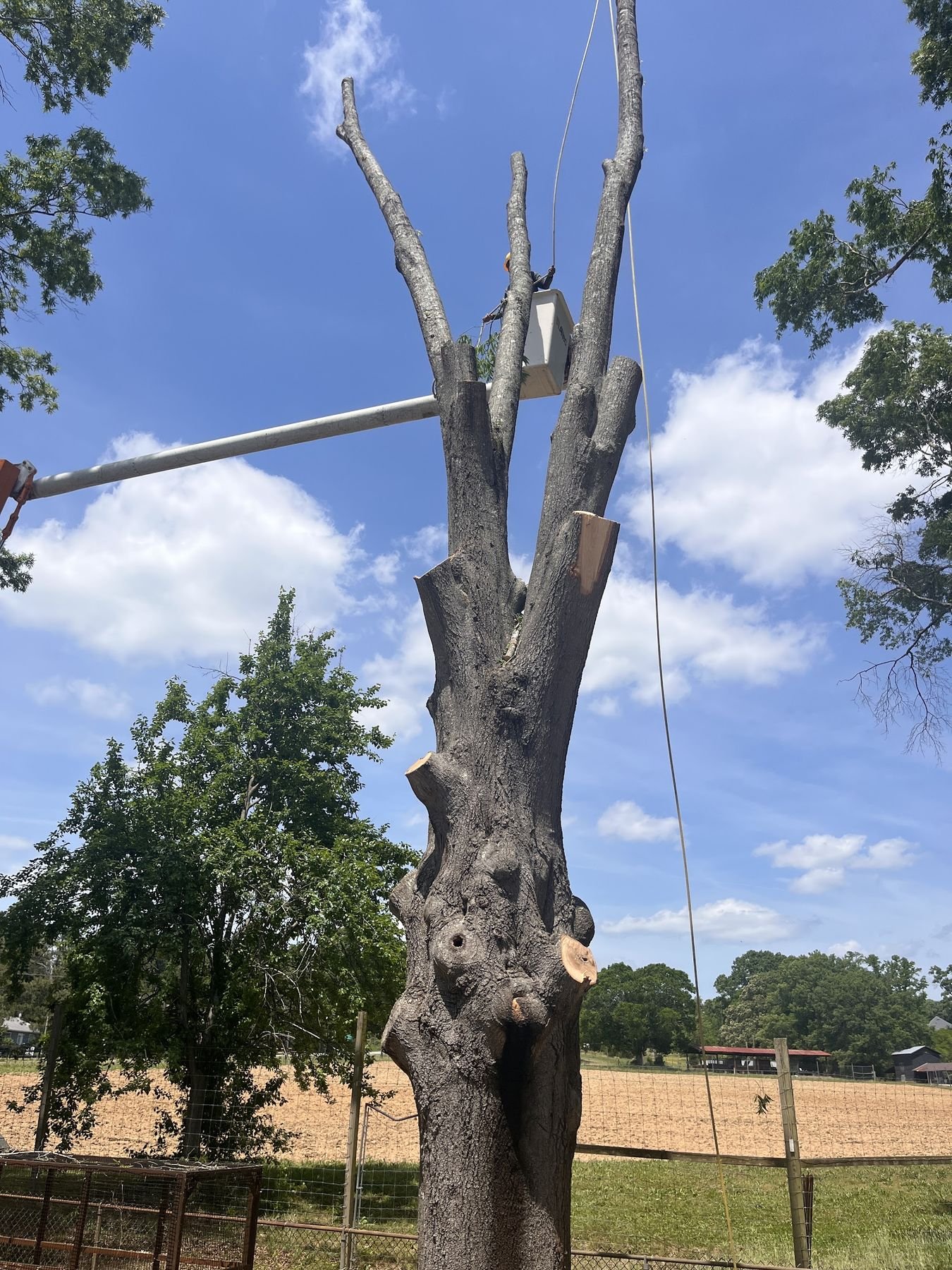
Topping is not trimming, and we will not do it
Sooner or later somebody offers to top your tree, meaning cut the whole crown back to stubs at a uniform height. It is cheap, it is fast, and it is the single worst thing you can do to a mature tree.
Topping strips the leaves the tree feeds itself with, so it panics and throws out a mass of weak shoots below every cut. Those shoots are anchored only in the outer layer of the stub, which means the regrowth is far more likely to fail in a storm than the limb you removed.
The stubs also cannot seal over the way a proper cut at a branch collar can, so decay walks straight down into the trunk. Five to ten years later the tree is taller than it was, weaker than it was, and now actually dangerous.
The International Society of Arboriculture explains why topping hurts trees in more detail. If a tree really is too big for its spot, the honest answer is either a proper reduction at the right cut points, or taking it out and planting something that fits.
What actually changes the price.
Triad publishes no prices, and trimming varies more than removal does because the amount of work is a judgment call rather than a fixed tree.
How much is coming out
Deadwooding one limb over a driveway and thinning a whole canopy are very different days, even on the same tree.
How the crew gets up there
A tree the bucket truck can park under costs less to work than one in a back yard where somebody has to climb it.
Where the wood lands
Over an open lawn the brush comes straight down. Over a roof, a fence, or a pool, every piece gets roped and lowered.
Worth getting looked at before the next storm
- Dead limbs you can see from the ground
- Branches touching or rubbing the roof
- A canopy so dense the wind cannot pass through it
- Limbs over a driveway where cars park
- Growth crowding a power service drop
- Cracked or hanging wood left over from the last storm
Trimming is also the cheapest way to put off a removal. A canopy thinned before storm season is far less likely to become the tree that came down on the garage. The ISA's guide to caring for mature trees is a good place to start if you want to keep yours.
Where we work
Greensboro is home, and the yard is at 4262 Pleasant Garden Rd. The crews cover the wider Triad: High Point, Winston-Salem, Jamestown, Kernersville, Summerfield, Oak Ridge, Pleasant Garden, Archdale, Thomasville, Gibsonville, Whitsett, Browns Summit, Colfax, Stokesdale, McLeansville, Randleman, and Julian.
If your town is not on that list it is still worth asking. The answer is usually yes.
What customers said about work like this
Taken from the company's Google profile, word for word.
They did an amazing job removing a very large oak tree that was about 10 ft away from the house as well as doing some heavy limb trimming around. Great crew and the price was unbeatable. Thanks again!
Triad Tree took down several large trees, limbed several more, and removed stumps. They did an excellent job and their crew was quick and courteous. When I asked them to go back near the end and take out one more large limb, they were happy to accommodate me. I recommend them highly.
A crew of five arrived with lots of equipment at 9:00 am. Work involved crossing into neighbors on each side. In just two hours, two trees removed and three trimmed substantially. All three yards were cleaned! All debris removed! Fantastic!
Tree trimming questions we get every week.
What months should you not trim trees in North Carolina?
When is the best time to prune, then?
How much does it cost to trim a tree in Greensboro?
What is the difference between trimming and topping?
How often should trees be trimmed?
Can you cut branches hanging over my roof?
What about branches growing into power lines?
Will trimming hurt the tree?
The rest of what we do.
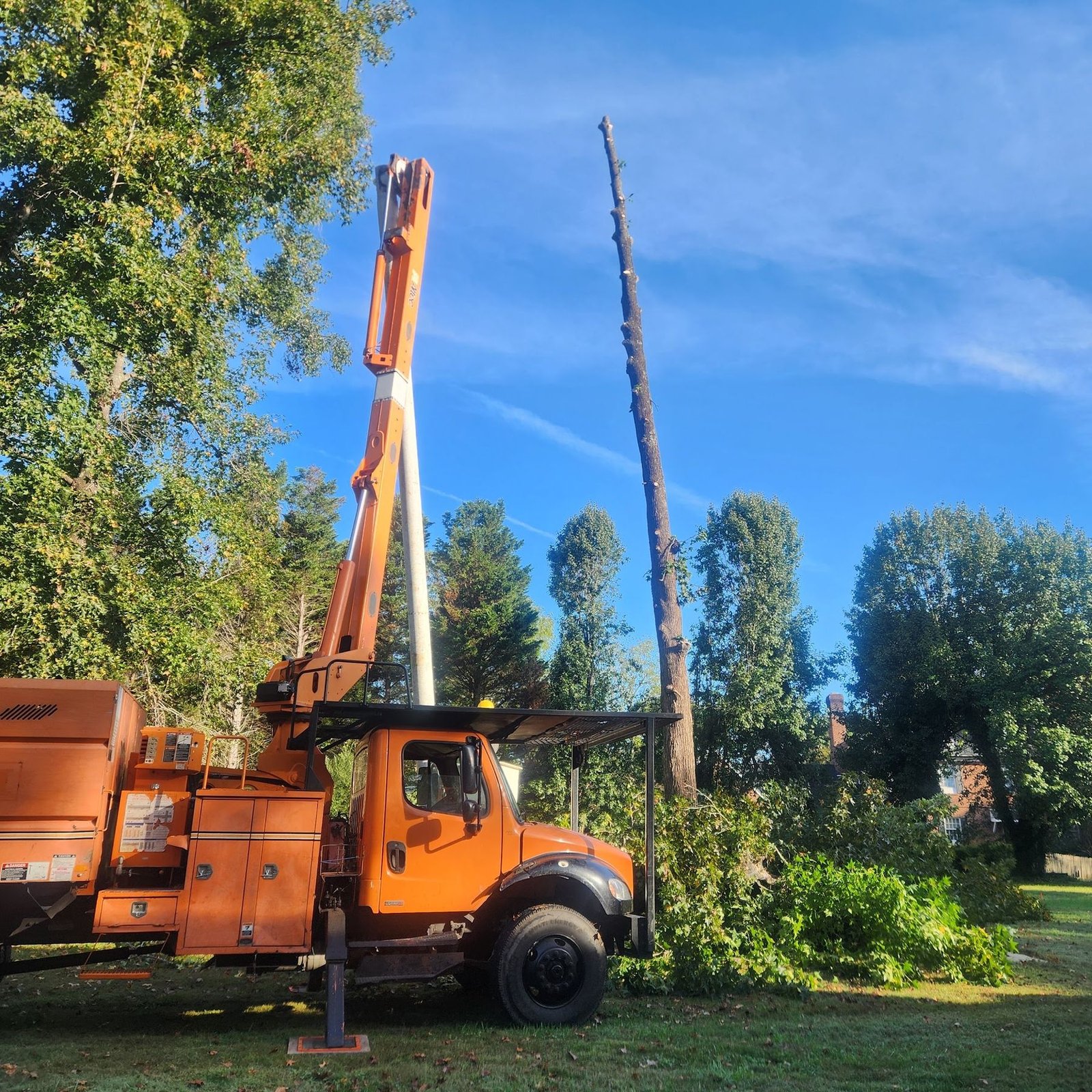
Tree Removal
Large and hazardous trees taken down in sections, roped and lowered, and hauled out.
Read more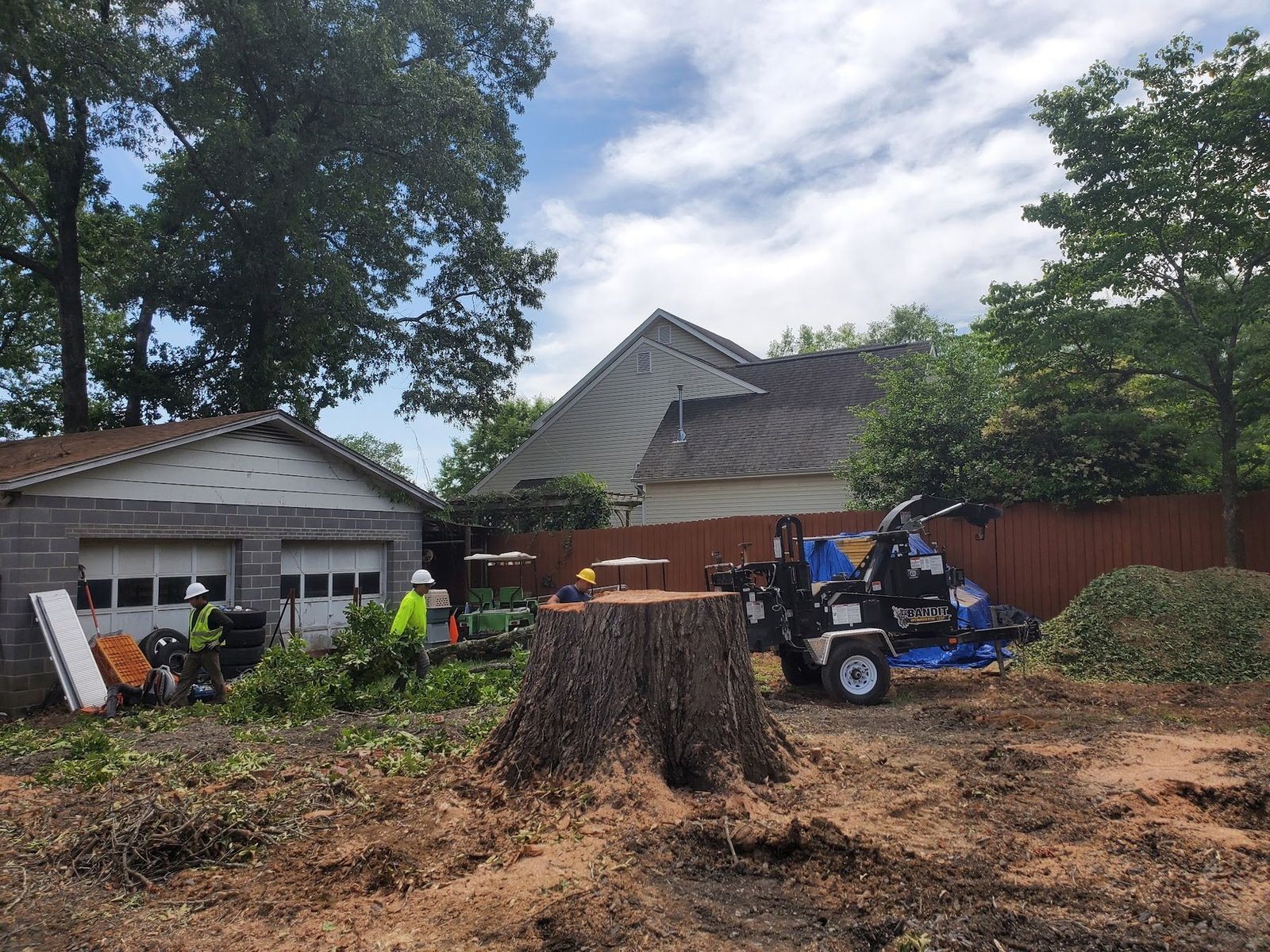
Stump Grinding
Ground out below grade so you can put grass over it, including stumps we did not leave.
Read more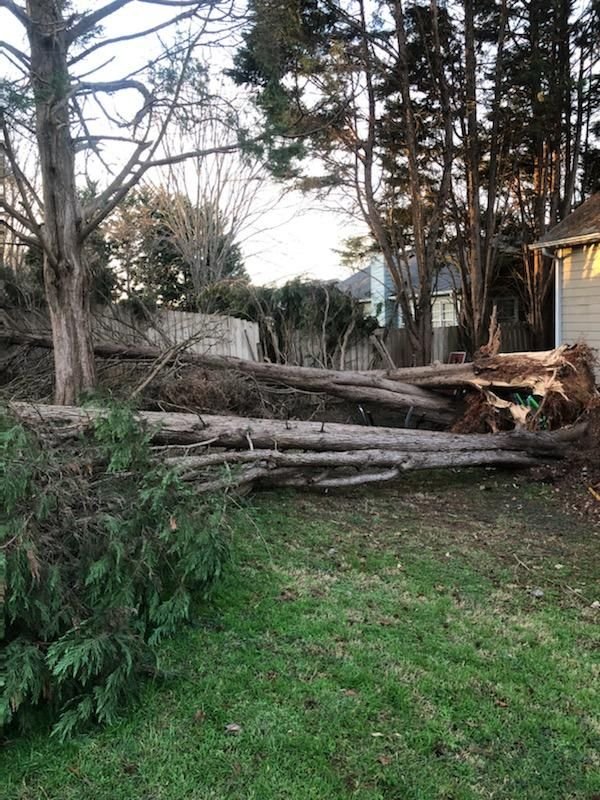
Storm Damage
Trees on houses, across driveways, or hung up in other trees. Seven days a week.
Read more