

What we clear, and what that word covers
Land clearing means very different things to different people, so it is worth being specific about what Triad actually does.
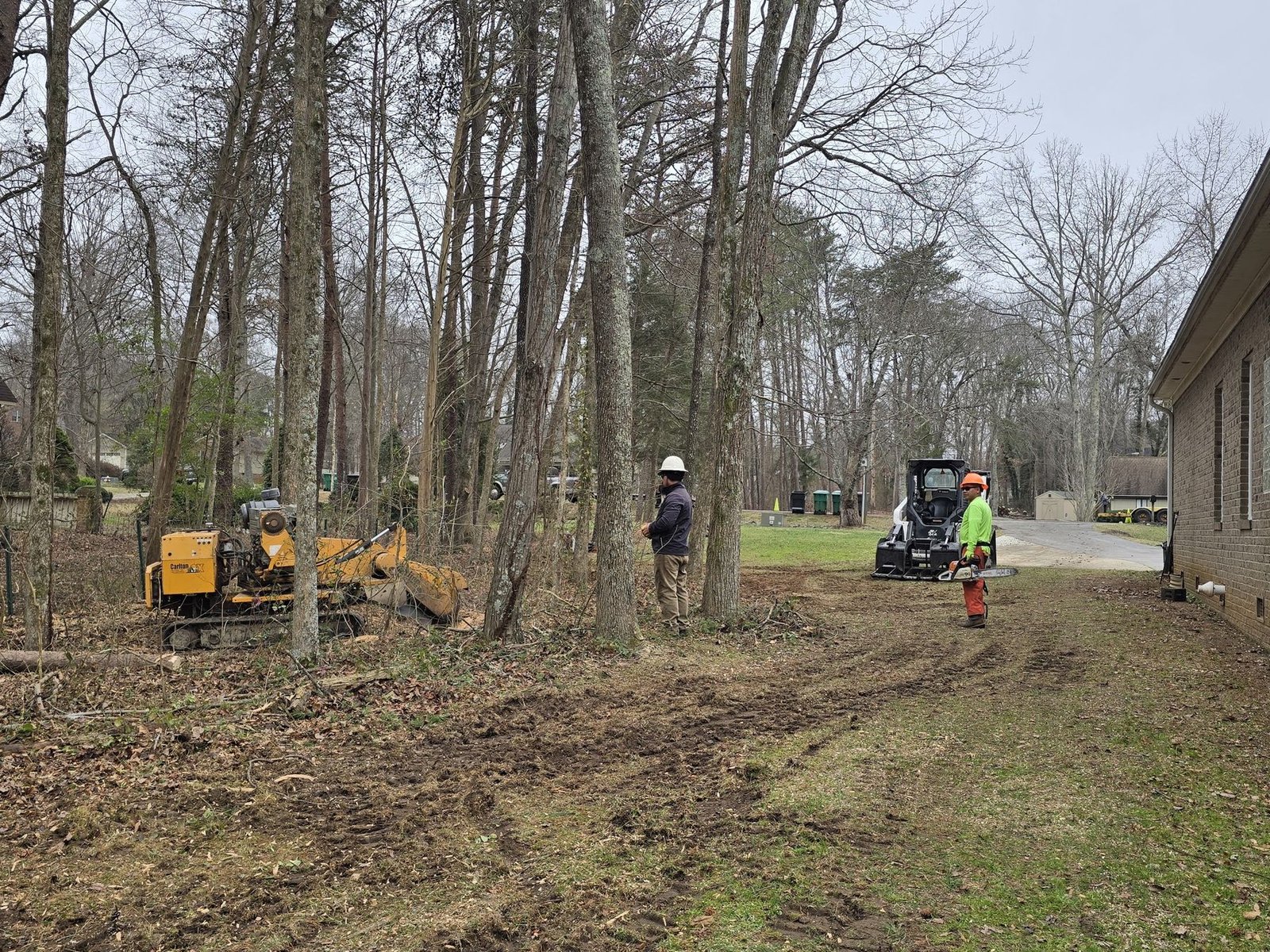
Building lots. Taking a wooded lot down to the pad so a builder can get started, including the trees, the undergrowth, and the stumps.
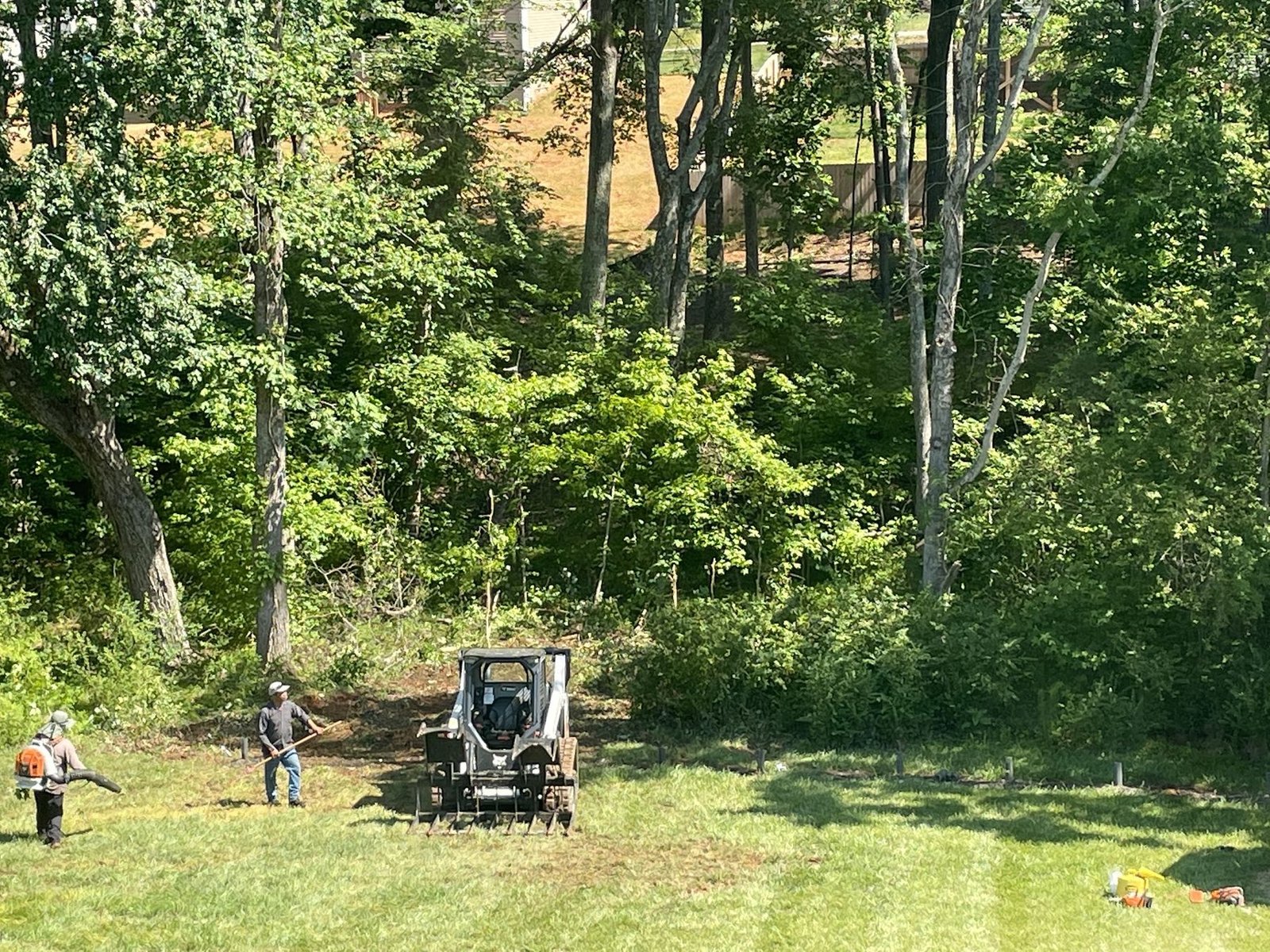
Fence lines and property lines. Cutting a clean line through overgrowth so a fence crew can work, or so you can see where your land actually ends.
Overgrown acreage. Land that has gone back to scrub and saplings, brought back to something you can mow, fence, or graze.
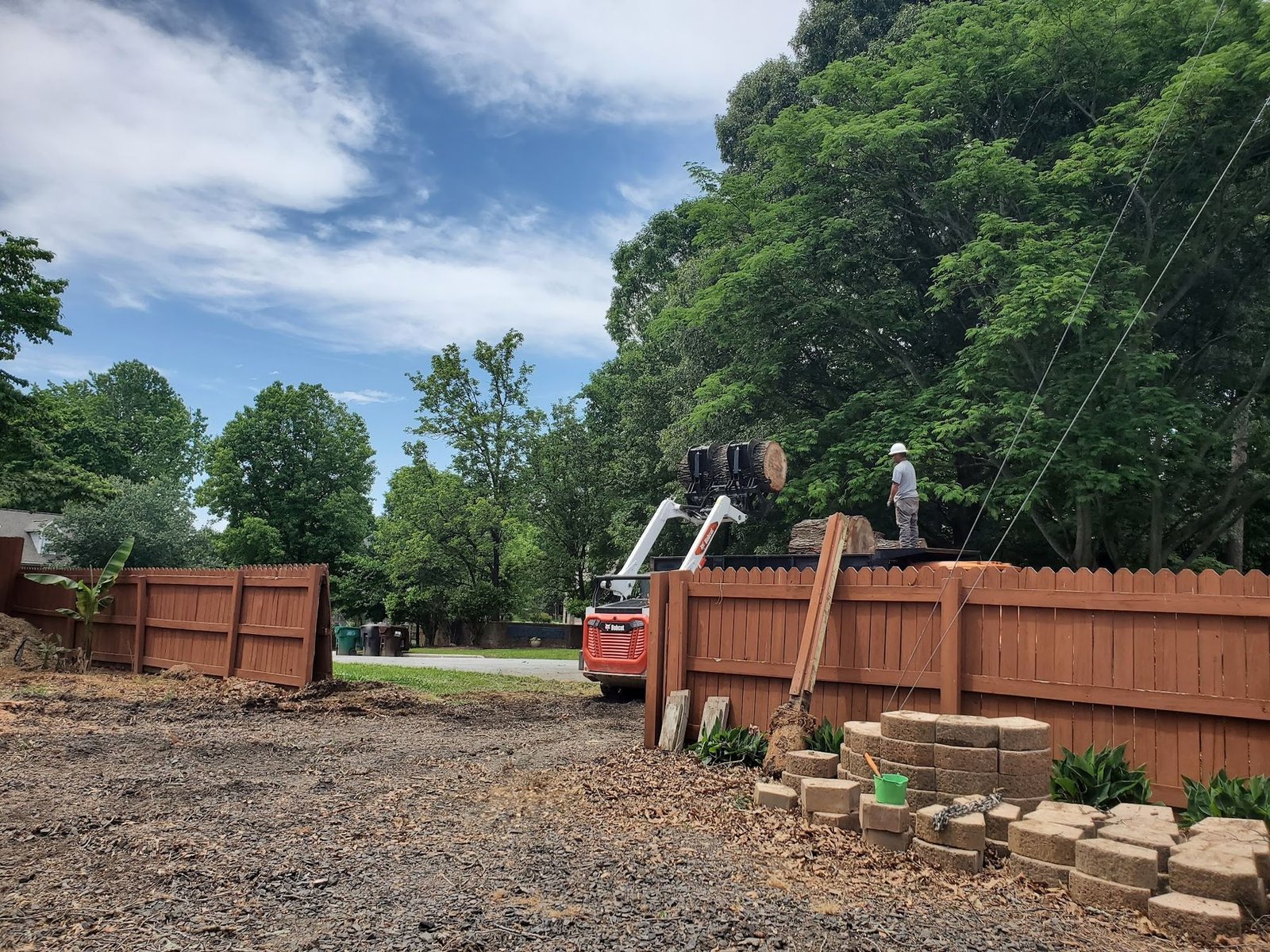
The equipment is skid steers, a forestry mulcher, a grapple truck, and the same climbing and rigging crew as the tree side, for anything too big or too close to something to just push over.
Permits are your responsibility, and they are worth checking before anybody starts. Depending on the acreage, the slope, whether a stream or a buffer is involved, and whether it is inside city limits, clearing can need a grading permit and an erosion-control plan. Greensboro and Guilford County both publish their requirements. We are a tree company, not a permitting service, so ask the city or county first rather than after.
Mulch it in place, or haul it off.
Nearly all of the cost difference between one clearing quote and another comes down to what happens to the material. There are two honest answers and they suit different jobs.
Forestry mulching, where the material stays
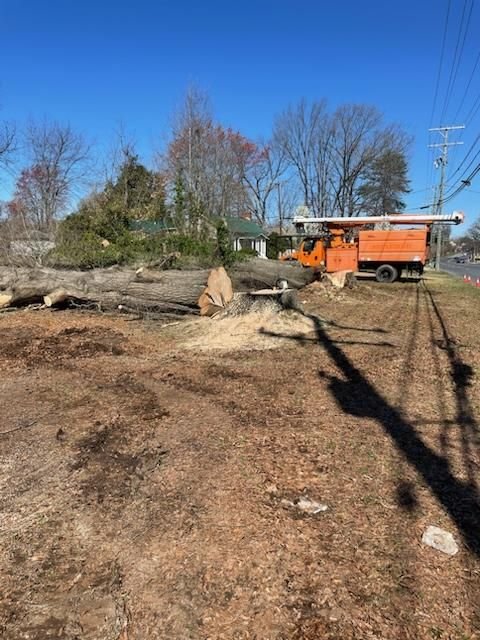
A forestry mulcher grinds standing brush, saplings, and small trees where they stand and leaves the material on the ground as a layer of chip.
It is fast, nothing has to be hauled anywhere, and the mulch layer holds the soil together through the next rain, which matters on any slope in Piedmont clay.
It is the right answer for overgrown acreage, fence lines, trails, and anywhere you want the land usable rather than bare. It is the wrong answer if something is getting built on it, because a builder does not want a foot of wood chip over the pad.
Cut and haul, where the site ends up bare
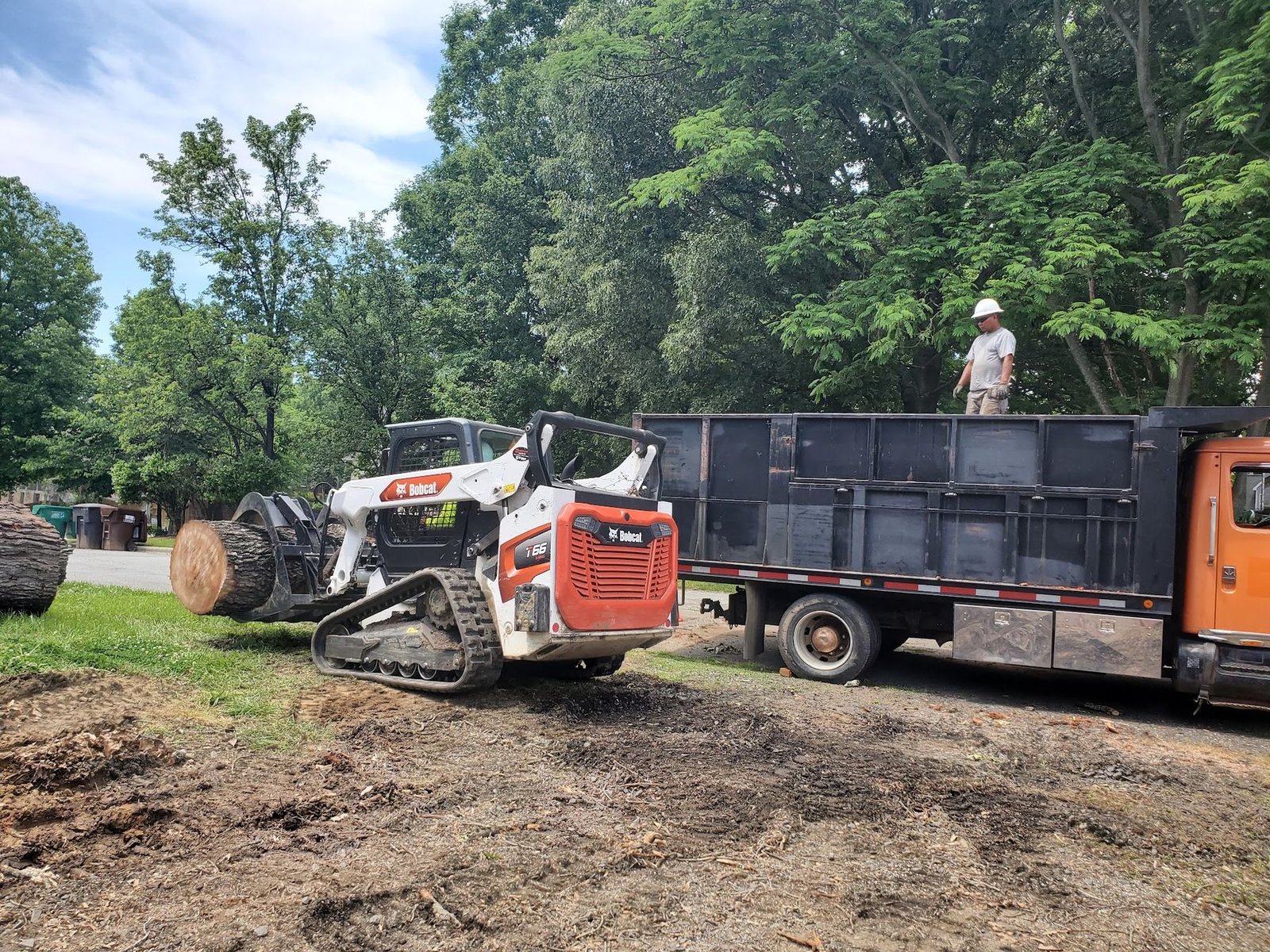
The alternative is cutting everything, grinding or pulling the stumps, and taking the material off site on the grapple truck and the chip truck.
It costs more, because every load is a trip. What you get is a clean site with nothing left to settle, rot, or get in the way of a foundation.
Merchantable timber can change the arithmetic. If there is enough good hardwood on the lot, some of it has value, and that is worth raising at the estimate rather than assuming either way.
Why nobody can quote your acre over the phone
Search for land clearing and every result promises a price per acre. Ask any of them to hold that number without walking the site and watch what happens.
An acre is not a unit of work. An acre of five-year-old scrub and an acre of mature hardwood are different jobs by a wide margin, and the second one is closer to twenty individual tree removals than to a mowing job.
What the estimator is actually pricing:
- Density and size. Saplings and briar go through a mulcher. Mature trees have to be felled, cut, and moved.
- Terrain. Slope, wet ground, and rock all slow machines down or rule them out.
- What is at the edges. Houses, fences, and power lines mean the boundary work is done carefully by hand.
- Where the material goes. Mulched in place, hauled off, or burned if the county allows it that week.
- Stumps. Ground, pulled, or left, and that is your call.
Triad publishes no prices for this or anything else. The estimate is free and somebody walks the ground.
Clearing around the trees you want to keep
Almost nobody wants a bare rectangle. Most clearing jobs have a handful of trees the owner wants left standing, and getting that right is the difference between a cleared lot and a ruined one.
The mistake is thinking a tree that survived the machines survived. A hardwood that spent forty years in the middle of a wood grew a shallow root system and a tall thin trunk, because the trees around it took the wind. Clear everything around it and it is suddenly a lone tree in an open field, with roots and a trunk that were never built for that.
Some of them are fine. Others blow over in the first real storm after the lot is cleared, which is a bad surprise on a site somebody is about to build on.
The other half of it is underground. Driving a loaded skid steer over the root zone of a tree you are keeping compacts the soil, and compacted soil kills trees slowly enough that nobody connects it to the clearing job two years later.
NC Forest Service publishes guidance on managing standing timber, and NC State Extension Forestry is the place to look before you decide what is worth keeping.
So it is worth walking the site and saying out loud which trees are staying, before anything starts. The crew fences those root zones off and keeps machines out of them, and the estimator will tell you straight if one of your keepers is a bad bet once its neighbors are gone.
Worth clearing before it gets harder
- A building lot that needs to be pad-ready
- Fence line you cannot walk, let alone build on
- Acreage that has gone back to saplings and briar
- A treeline creeping further into the yard every year
- Dead and leaning timber over a driveway or a track
- Ground you want to mow, fence, or graze again
Where we work
Greensboro is home, and the yard is at 4262 Pleasant Garden Rd. The crews cover the wider Triad: High Point, Winston-Salem, Jamestown, Kernersville, Summerfield, Oak Ridge, Pleasant Garden, Archdale, Thomasville, Gibsonville, Whitsett, Browns Summit, Colfax, Stokesdale, McLeansville, Randleman, and Julian.
If your town is not on that list it is still worth asking. The answer is usually yes.
What customers said about work like this
Taken from the company's Google profile, word for word.
A crew of five arrived with lots of equipment at 9:00 am. Work involved crossing into neighbors on each side. In just two hours, two trees removed and three trimmed substantially. All three yards were cleaned! All debris removed! Fantastic!
I highly recommend Triad Tree Removal for removing trees from your yard. They were very easy to work with, and their quote worked within our budget. They cleaned up well as they left, and that meant a lot to us!
Land clearing questions we get every week.
How much does it cost to clear an acre in North Carolina?
What is the cheapest way to clear land?
Do I need a permit to clear land on my property?
Do you take the stumps out too?
What happens to the trees you take down?
Can you clear right up to a fence or a property line?
How long does clearing take?
Do you do the grading afterwards?
The rest of what we do.
Tree Removal
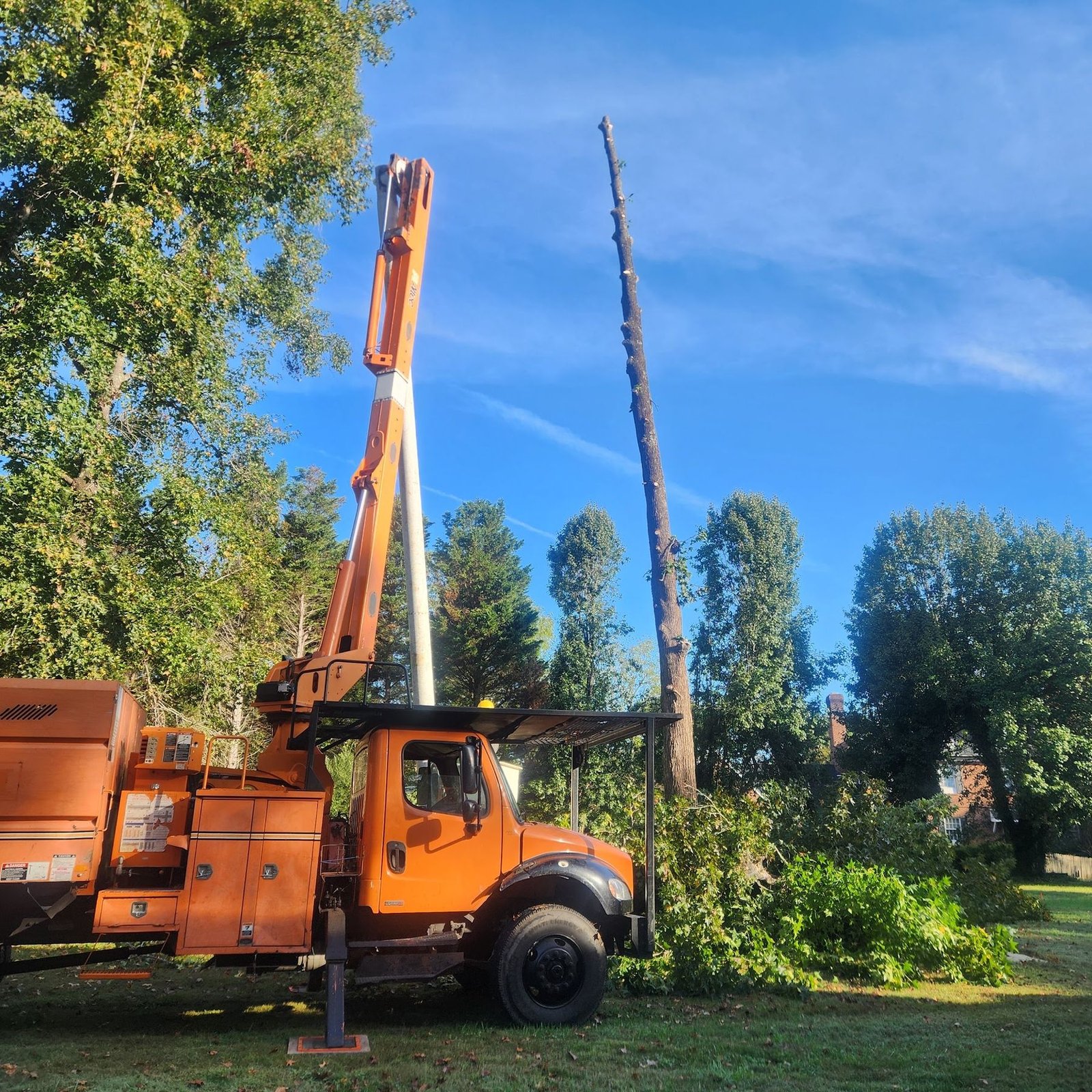
Individual large and hazardous trees taken down in sections and hauled out.
Read more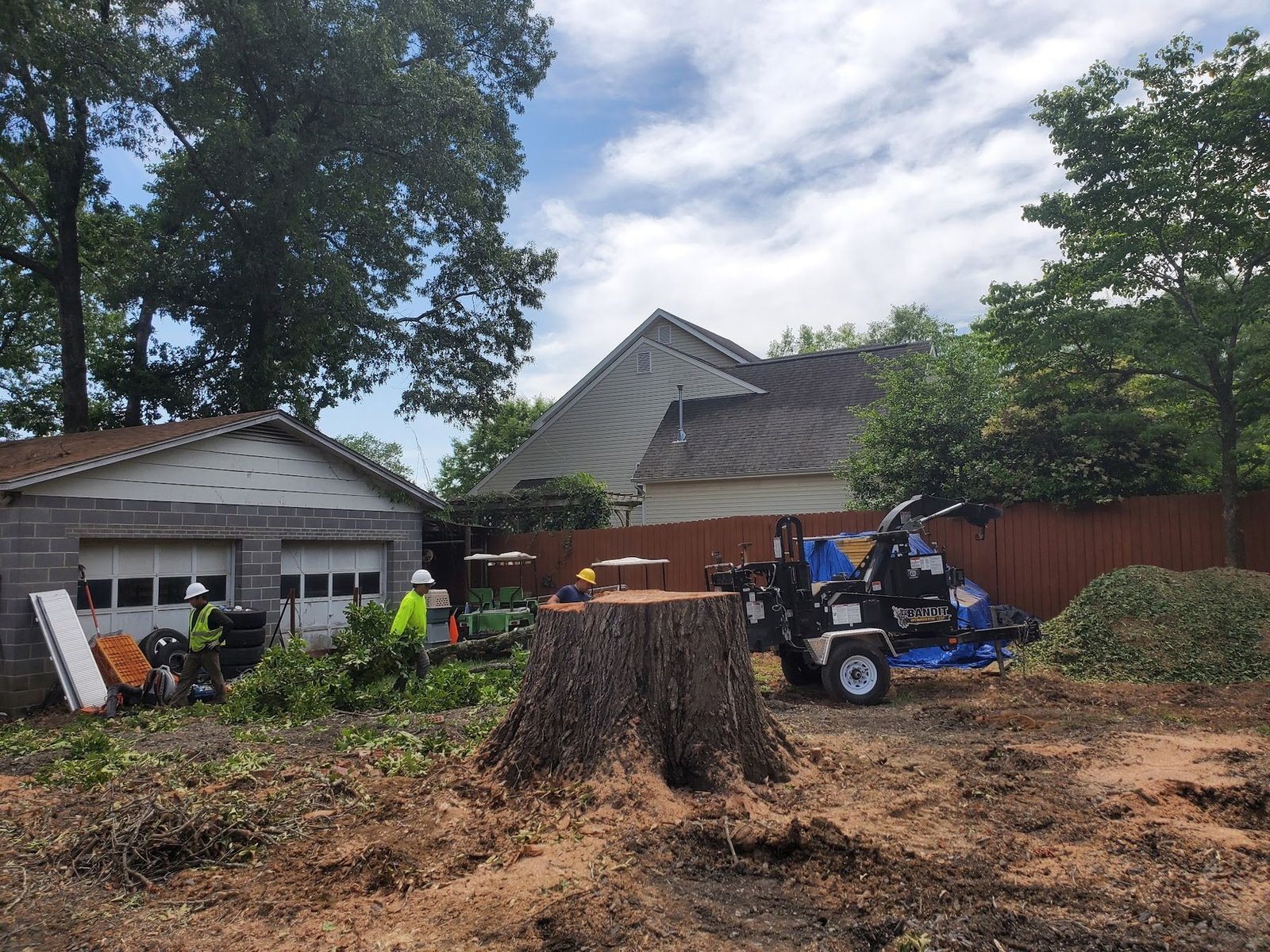
Stump Grinding
Ground out below grade so the site can be seeded, graded, or built on.
Read more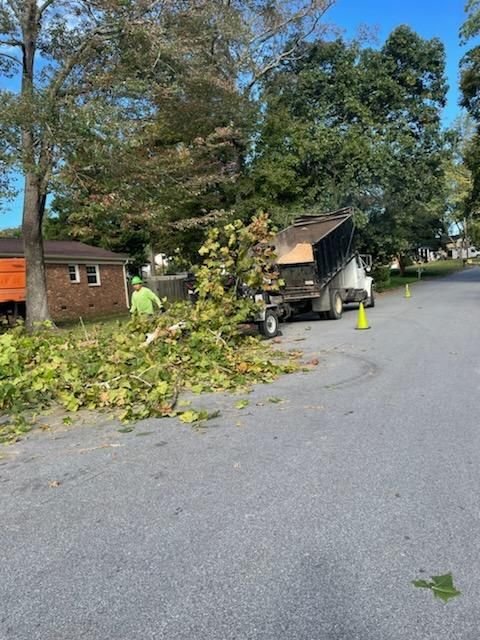
Hauling & Chipping
Everything worth moving goes out on the grapple truck, and the brush goes through the chipper.
Read more